You have heard the stories. Safari is for foreigners with dollars to burn. That is true only if you let it be. For Kenyan citizens and East African residents, the math changes completely. This Kenya Safari Costs Guide Kikuyu Speakers can trust breaks down what the Kenya Wildlife Service (KWS) charges you. It is a fraction of what a tourist from London or New York pays.
This guide is written for you. We speak your language, literally and figuratively. We will break down what a safari costs in Kenya shillings, not dollars. We will name real lodges near Nyeri and Nanyuki. We will tell you what to carry to the gate and how to pay with M-Pesa.
No hype. Just numbers you can plan around.
Kenya Safari Costs Guide Kikuyu Speakers Can Use: Citizen vs Non-Resident Rates
The biggest secret in Kenyan tourism is the resident rate. Here is the same park, same day, two different prices.
| Park or Reserve | Citizen/Resident Fee (KES) | Non-Resident Fee (USD) | Drive from Nyeri | Approx Drive Time |
|---|---|---|---|---|
| Aberdare National Park (Ruhuruini Gate) | 1,100 per adult per day | ~$60 (indicative, KWS range) | 20 km | 40 minutes |
| Lake Nakuru National Park | 1,150 per adult per day (indicative range) | $90 | ~165 km | 3.5 hours |
| Maasai Mara National Reserve | 5,000 per adult per day (low season, indicative) | $100 (Jan-Jun), $200 (Jul-Dec) | 260 km | 5-6 hours |
| Nairobi National Park | 1,150 per adult per day (indicative range) | $80 | 145 km | 3 hours |
| Mount Kenya National Park | 1,100 per adult per day (indicative range) | ~$60 (indicative) | 45 km | 1 hour |
KWS raised non-resident fees in October 2025. Citizen rates above are current official figures where known. The Maasai Mara fee is set by Narok County, not KWS, so it is listed separately and marked indicative.
The Maasai Mara is run by Narok County, not KWS. The county sets those fees. Even so, the citizen rate is still a fraction of the non-resident rate.
Proof of Residency: What to Carry
You cannot just say you are Kenyan. You must prove it.
- For citizens: your national ID card is enough.
- For dual citizens: carry your Kenyan passport.
- For residents: carry your passport with a valid work permit or dependent pass.
Keep these in your day bag, not your suitcase. You will show them at every gate. Park rangers know the tricks. Do not try to use a friend’s ID. It is not worth the fine or the embarrassment.
Budget Safari Costs: What You Get for Less
A budget safari for a Kenyan citizen can cost between KES 3,500 and KES 8,000 per person per day. This assumes you are staying in simple bandas, public campsites, or modest guesthouses.
What this price includes:
- Park entry fees for citizens
- Basic accommodation (often shared bathrooms)
- Three simple meals
- Transport in your own vehicle or a shared public matatu to the gate
What it does not include:
- A dedicated safari vehicle with pop-up roof
- Professional guide (unless you hire one at the park)
- Drinks and tips
For a Kikuyu family based in Nyeri, a day trip to the Aberdares is very affordable. You wake up early, drive the 20 km to the Ruhuruini Gate, pay your KES 1,100 each, and spend the day inside. You will see bongo antelope if you are lucky. That animal is shy, but the Aberdare forests are one of the few places it lives. For a full guide on where to spot it, read our Aberdare wildlife sighting guide.
If you want to stay overnight, consider the public campsites near Treetops or the KWS self-catering cottages. They are basic but safe. You save money because you cook your own food.
Mid-Range Safari Costs: Comfort Without Extravagance
A mid-range safari costs KES 10,000 to KES 18,000 per person per day for citizens. This is the sweet spot for most local families.
Mid-range means:
- A private safari vehicle with a pop-up roof
- A professional driver-guide
- Stay in a lodge or tented camp with private bathroom
- Full board (breakfast, lunch, dinner)
- Park fees for citizens included
For the Kikuyu heartland, we recommend these real lodges near the Aberdares and Nyeri:
- The Ark near Aberdare: A classic tree lodge. Rates for citizens are roughly KES 12,000 per person on full board. You watch animals from a viewing deck at night.
- Aberdare Country Club in Mweiga: About 30 minutes from the park gate. Expect KES 9,000 to KES 14,000 per person. It has a golf course and calm grounds.
- Ol Pejeta Conservancy near Nanyuki: Entry is separate from KWS. It is a private conservancy. Citizen rates are roughly KES 1,500 per person per day (indicative). The lodges inside, like Sweetwaters Tented Camp, cost around KES 15,000 to KES 25,000 per person. It is home to the last two northern white rhinos on earth.
A 3-day mid-range safari to the Maasai Mara for a family of four will cost between KES 120,000 and KES 200,000 total. That includes everything: park fees, vehicle, guide, and accommodation. It is not cheap, but it is a fraction of what a tourist pays.
Luxury Safari Costs: The Full Treatment
Luxury safaris are for special occasions. They cost KES 25,000 to KES 60,000 or more per person per day.
This level includes:
- High-end lodges or exclusive camps
- Private guiding
- All meals, often fine dining
- Game drives in a 4×4 Land Cruiser
- Often includes drinks and laundry
In the Mara, the private conservancies like Naboisho or Mara North charge USD 80 to USD 150 per person per night on top of the lodge rate. These conservancies limit visitor numbers. You see more animals and fewer vehicles. That fee is not reduced for Kenyans. It is a private business, not a public park.
If you want luxury near home, look at the Aberdare or Mount Kenya region. Some private ranches offer high-end stays. They cost less than the Mara because they are not as famous.
What Drives the Price? Five Factors
You can control some of these. You cannot control others.
- Season: High season in the Mara is July to December. Prices double or triple.
- Accommodation tier: A tent with a shared bathroom costs less than a lodge with a pool.
- Vehicle type: A standard saloon car cannot do game drives. You need a 4×4 with a raised roof. It costs more to rent.
- Group size: A safari vehicle fits 6 to 7 people. Split the rental cost across the group. Solo travelers pay the most.
- Operator type: Booking directly with a Kenyan operator is almost always cheaper than going through an international agency. The agency takes a commission of 20% to 30%.
For a deeper comparison of how we structure pricing across different language guides, see how we break down safari costs for other language guides.
Seasonal Pricing: When to Save
Kenya has three pricing seasons. The dates are not fixed every year, but the pattern holds.
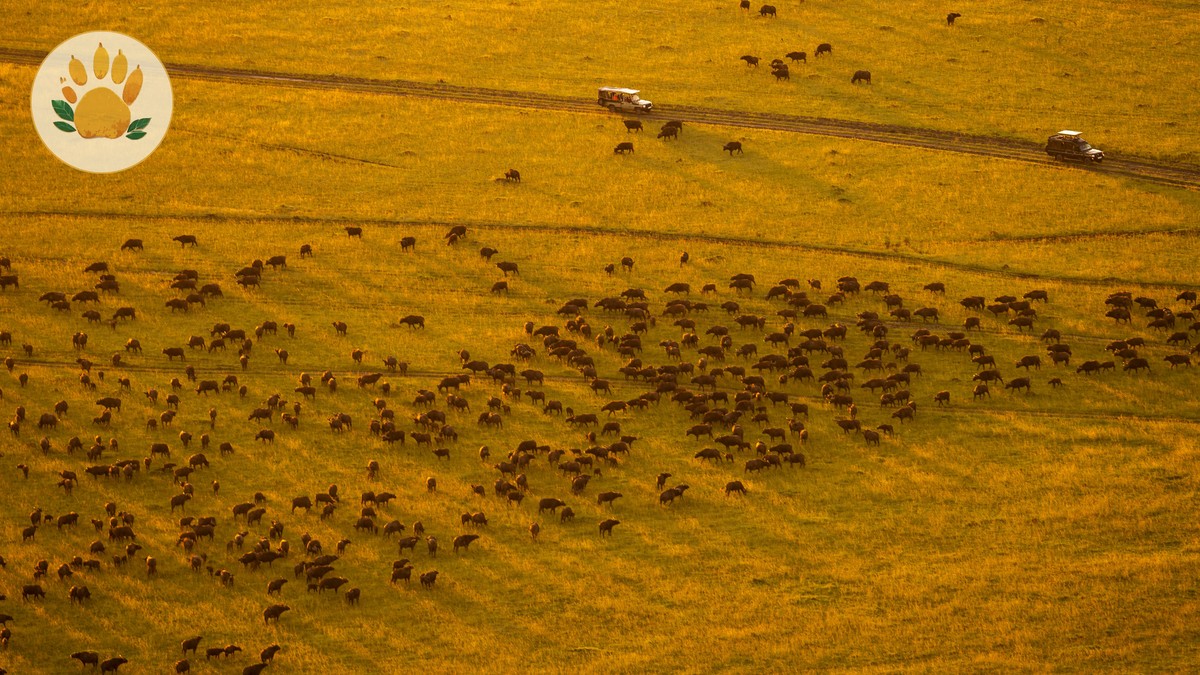
- Peak Season (July to October): The wildebeest migration is in the Mara. This is the most expensive time. Non-resident fees hit USD 200 per day. Lodges fill up months ahead. If you have no flexibility, book early.
- Shoulder Season (November, January to March): The migration has moved on. The short rains are over. The grass is short, so animals are easy to spot. Prices drop 20% to 30%.
- Green Season / Low Season (April to June): The long rains fall. Some camps close. The landscape is lush, and the birdlife is spectacular. Prices drop again. This is the cheapest time. A budget safari to the Mara can cost KES 20,000 per person for the whole weekend.
For a citizen, the difference between peak and low season can be roughly 40%. The park fee for the Mara is KES 5,000 in low season. It is higher in peak season, but the county publishes its exact rates each year.
Cash and M-Pesa: How to Pay
Carry cash in KES. Most park gates accept M-Pesa now, but not always. The network can be slow in remote areas.
For a weekend safari for two in the Mara, carry at least KES 15,000 in cash. This covers park fees, fuel, tips, and small purchases.
- M-Pesa works for most lodges and tour operators. You pay a deposit via M-Pesa to confirm the booking.
- Park gates that accept M-Pesa will show a till number. If in doubt, ask the ranger.
- Do not rely on ATMs inside the parks. There are none. The nearest reliable ATM is usually in Narok or Nakuru town. Fill up your tank before entering the park.
Can you pay for a full safari package with M-Pesa? Yes. Most Kenyan operators accept it. They will send you a payment request to your phone. You approve it, and the booking is confirmed.
Kenya vs Tanzania: The Cost Comparison
You might wonder if you should cross the border to Tanzania instead. For a resident of Kenya, the answer is almost always no.
| Item | Kenya (Citizen Rate) | Tanzania (East African Citizen Rate) |
|---|---|---|
| Ngorongoro Crater fee per day | N/A (no equivalent) | ~$50 for EAC citizens (indicative) |
| Serengeti fee per day | N/A (we use Mara instead) | ~$30-40 for EAC citizens (indicative) |
| Average mid-range lodge per night | KES 10,000-18,000 | KES 12,000-20,000 (indicative) |
| Distance from Nyeri | Mara is 260 km | Serengeti is 500+ km |
Tanzania is not cheaper, and it is much farther from the Kikuyu heartland. The Mara is your backyard. Use it. If you are after the migration, the Mara and Serengeti share the same ecosystem. The animals cross back and forth. You do not need a passport to see them.
Sample Itinerary: 3-Day Aberdare Trip for Two
Here is a real plan with real numbers. Let us call it a weekend escape.
Day 1: Nyeri to Aberdare
- Drive 20 km from Nyeri town to Ruhuruini Gate. About 40 minutes.
- Park entry: KES 1,100 x 2 = KES 2,200.
- Lunch at a picnic site inside the park.
- Drive the Salient Loop for the afternoon.
- Overnight at a self-catering banda near the gate: KES 3,000 per night (indicative).
- Total for day 1: roughly KES 6,000 including fuel.
Day 2: Full Day in the Park
- Park fees already covered if you bought a 24-hour ticket. If not, pay again.
- Hire a ranger guide for the day: KES 2,000 to KES 3,000 (indicative).
- Walk or drive to the waterfalls and viewpoints.
- Cook your own dinner to save money.
- Total for day 2: roughly KES 4,000.
Day 3: Mount Kenya or Home
- Drive 35 km to the Mount Kenya Naro Moru gate for a morning walk (optional).
- Entry fee: KES 1,100 per person (indicative).
- Return to Nyeri by lunchtime.
- Total for day 3: roughly KES 3,000.
Grand total for two people, 3 days: KES 13,000 to KES 14,500.
That works out to roughly KES 2,200 to KES 2,400 per person per day, lower than our general budget range above. You get there by sharing costs across two people, self-catering, and staying close to Nyeri. A solo traveler or a longer trip will land closer to the standard KES 3,500-8,000 budget range.
That is less than the cost of a single non-resident entry fee to the Mara for one day. This is the power of the citizen rate.
FAQ: Quick Answers
How much does a Kenya safari cost per person per day? For citizens, budget is KES 3,500-8,000, mid-range is KES 10,000-18,000, luxury is KES 25,000+.
Is a Kenya safari cheaper for Kenyan citizens? Yes. Dramatically. Park fees are 5 to 15 times lower.
What documents prove Kenyan identity at park gates? Your national ID or Kenyan passport. Residents need a passport with a work permit.
Is a day trip to Aberdare cheaper than the Mara? Yes. The drive is shorter, the fee is lower, and you can be home for dinner.
Can I pay for safari packages with M-Pesa? Yes. Most local operators and many lodges accept M-Pesa.
The SafariPure Difference
SafariPure does not list prices in dollars and assume you are visiting from abroad. We know you live here. We know your travel starts from Nyeri or Nanyuki or Thika, not Jomo Kenyatta International Airport.
Our guides are Kikuyu speakers who know the Aberdares the way others know the Mara. We will not push you into a luxury camp you cannot afford. We will show you the public bandas, the resident rates, and the routes that skip the tourist traffic. We also offer a full guide in Swahili if that helps your family plan together: see our Swahili-language safari cost guide.
Time in the wild, done properly, should not require a second mortgage. We keep that promise.
Ready to Plan Your Safari?
SafariPure can build a weekend or week-long trip around your budget, your family, and your starting point. Tell us whether you want to see the Aberdare bongo or the Maasai Mara migration, and we will handle the rest.
Book a time to speak with our team. We will send you a plan with exact KES prices before you pay a single shilling. Let us take you into the wild, the way it should be done.