Most first-time travelers pack sunscreen and a DEET repellent for Kenya, then apply both in whatever order feels natural. That guess costs you protection. The sunscreen insect repellent order safari guides actually recommend is simple, but it rarely makes it onto a packing list. The order matters, the wait time between products matters, and DEET quietly shortens how long your sunscreen actually works. Here is the routine we use on our own trips, built around a real day in the Maasai Mara rather than a generic tip.
The Sunscreen Insect Repellent Order Safari Guides Recommend
Apply sunscreen first, let it absorb for about 15 minutes, then apply repellent on top. Sunscreen is a barrier product that needs to bind to skin. Repellent works on the surface and needs less time to take effect. Layering them the other way traps sunscreen under a film of DEET or picaridin and reduces how evenly it spreads. Dermatology guidance from groups like the American Academy of Dermatology has said this for years. It rarely gets tied to an actual game drive, though, which is where the order actually gets tested.
A full day of protection, hour by hour
A typical day out of a Mara camp starts before sunrise and ends after dark, so your skin faces two different threats at two different times. Mosquitoes and tsetse flies are worst at dawn, dusk, and in shaded riverine bush. UV exposure peaks from late morning through mid-afternoon, made worse by glare off open grassland.
| Time | Location / activity | Main risk | What to apply |
|---|---|---|---|
| 05:30 | Camp, before dawn drive | Mosquitoes, low light biters | Repellent only, light layer |
| 06:00 to 09:00 | Game drive, Maasai Mara plains | Mosquitoes at river crossings | Sunscreen at 06:00, repellent 15 min later |
| 11:00 to 14:00 | Midday sun, open vehicle or camp | UV exposure, minimal biting insects | Reapply sunscreen every 2 hours |
| 16:00 to 18:30 | Afternoon and evening drive | Tsetse flies near Mara River, mosquitoes rising | Sunscreen reapplication, then repellent |
| 19:00 onward | Camp dinner and evening | Mosquitoes peak after dusk | Repellent, long sleeves, treated net if provided |
This is the shape of a real day at a camp near the Mara Triangle or along the Talek River. It sits roughly 270 km from Nairobi, a 5 to 6 hour drive or a 45 minute flight into one of the local airstrips. The routine holds whether you are in the Mara, Amboseli, or Samburu.
Why combined 2-in-1 products underperform
Sunscreen-repellent combo sticks and sprays look convenient, but they force both ingredients onto the same reapplication schedule. Sunscreen needs reapplying every two hours in strong sun. Repellent lasts four to six hours depending on concentration. A combo product either wastes repellent through over-application or leaves your SPF lapsing while the DEET is still active. Separate products let you reapply sunscreen on its own schedule without wasting repellent, which matters on a multi-day trip where every spray bottle has to last.
DEET, picaridin, and oil of lemon eucalyptus
DEET at 20 to 30 percent remains the most tested option for malaria-risk areas, and it is what most Kenya safari guides carry as a backup. Picaridin at 20 percent performs similarly against mosquitoes, has less odor, and does not damage synthetic fabrics or plastic sunglasses frames the way DEET can. Oil of lemon eucalyptus works but needs reapplying more often, roughly every two hours, so it suits shorter outings better than a full day drive.
| Repellent | Effective concentration | Duration | Notes |
|---|---|---|---|
| DEET | 20 to 30% | 4 to 6 hours | Gold standard, can damage plastics |
| Picaridin | 20% | 4 to 6 hours | Odorless, fabric-safe |
| Oil of lemon eucalyptus | 30 to 40% | 2 hours | Natural origin, more frequent reapplication |
Does DEET reduce sunscreen SPF?
Yes. A 1997 study by Montemarano and colleagues, published in The Lancet, found that DEET can lower a sunscreen’s effective SPF by around a third when applied together. The volunteers in that trial were tied to the Walter Reed Army Institute of Research in the United States. The two chemicals interact on the skin surface and shorten how long the sunscreen barrier holds up. The fix is not to skip repellent. Reapply sunscreen more often than usual, roughly every two hours instead of every three, whenever DEET is also on your skin. Competitors covering this topic tend to bury that detail in a single line. It deserves to be the headline, because it changes how much sunscreen you need to pack.
Tsetse flies need different tactics
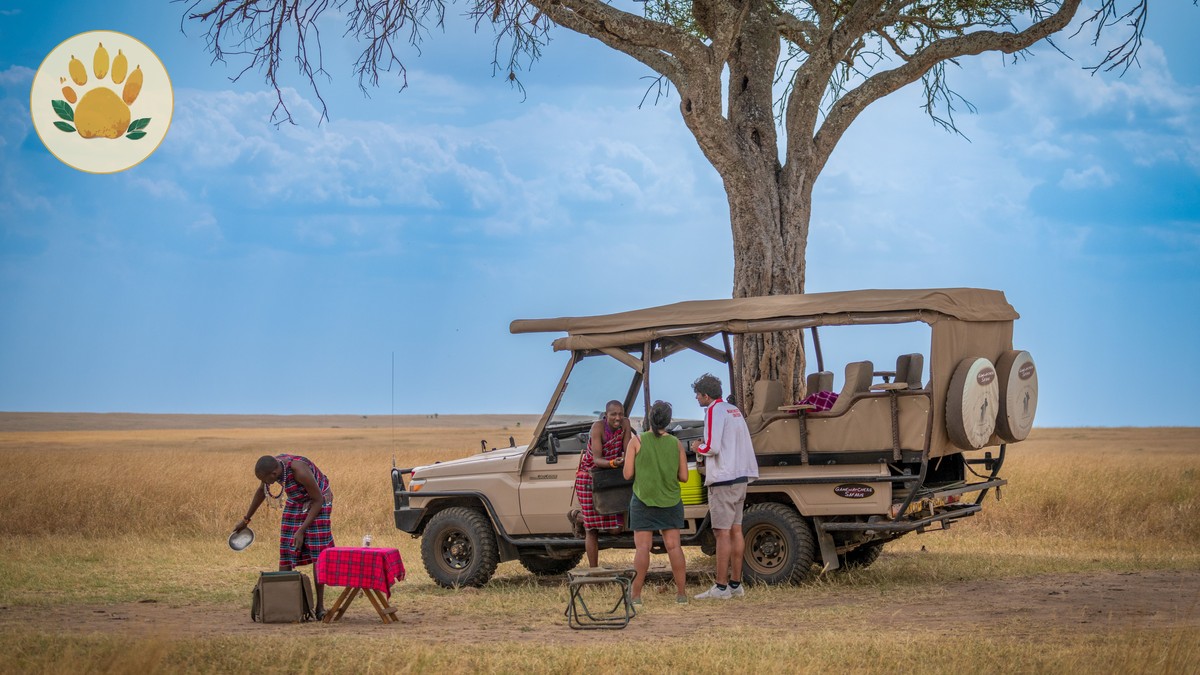
DEET and picaridin reduce mosquito bites well but barely slow down tsetse flies. Tsetse flies bite through thin fabric and are drawn to dark colors and moving vehicles rather than scent alone. The Maasai Mara and Samburu National Reserve both have active tsetse populations, especially near riverine woodland. If you are heading into either area, tsetse flies need a different defense than DEET alone, built around clothing color and fabric rather than spray concentration.
Permethrin-treated clothing as a companion layer
Permethrin is sprayed onto clothing, not skin, and lasts through several washes once treated. It kills insects on contact rather than repelling them by scent, which makes it useful against tsetse flies that shrug off DEET. Treat shirts, trousers, and hats before you leave home, ideally two days ahead so the spray dries fully. Combined with khaki or olive colors instead of navy or black, treated clothing cuts tsetse bites noticeably on Mara River drives.
Kids, pregnant travelers, and sensitive skin
DEET at 10 to 30 percent is considered safe for children over two months old, applied once daily rather than repeatedly. Picaridin is a common alternative for sensitive skin because it causes less irritation than higher DEET concentrations. Pregnant travelers can use DEET or picaridin at standard concentrations, but should check with a doctor about antimalarial medication separately, since that is a different decision from topical repellent. Mineral sunscreens with zinc oxide tend to suit sensitive skin better than chemical formulas, particularly for children on long game drive days. If you are already thinking through other essential safari health prep, sun and bite protection fits into that same pre-trip checklist.
What to buy before you leave vs. locally
Bring your main sunscreen, repellent, and permethrin spray from home. Nairobi pharmacies like Goodlife and supermarkets like Naivas carry basic SPF30 sunscreen and low-concentration repellent. DEET above 20 percent and picaridin formulas are harder to find outside major cities, and camp shops rarely stock either.
| Item | Buy at home (USD) | Buy in Nairobi (KES) | Availability |
|---|---|---|---|
| SPF50 sunscreen, 200ml | $12 to $18 | 1,200 to 1,800 | Widely available |
| DEET 30% repellent, 100ml | $8 to $12 | Limited, 1,500 plus | Bring from home |
| Picaridin 20% repellent | $10 to $14 | Rarely stocked | Bring from home |
| Permethrin clothing spray | $10 to $15 | Not stocked | Bring from home |
| Aloe after-sun gel | $6 to $10 | 500 to 800 | Widely available |
A full kit for a 7 day trip runs roughly $50 to $70 per person if bought at home, closer to double that if you try to source it piecemeal in Kenya. Most tented camps, including those inside Naboisho Conservancy and Mara North Conservancy, supply permethrin-treated bed nets over the beds. Budget camps and basic guesthouses outside conservancy land sometimes do not, so ask before you book if a net matters to you. Either way, plan for prepping for a full day of game drives alongside your sun and bite routine. Early starts and long hours in the vehicle call for the same kind of advance planning.
The SafariPure Difference
We build sun and insect protection into the daily rhythm of your itinerary, not as an afterthought on a packing list. Our guides know which stretches of the Mara River carry tsetse activity and which camps supply treated nets. They also know when to plan a midday stop out of direct sun rather than push through. That field-level detail is what separates a comfortable week from one spent fighting sunburn and bites you could have avoided.
Plan your trip
If you are working out logistics like this for a first Kenya safari, we are glad to help you plan the details before you go. Browse our Kenya safari tours or reach out through our contact page to start building an itinerary around your dates.