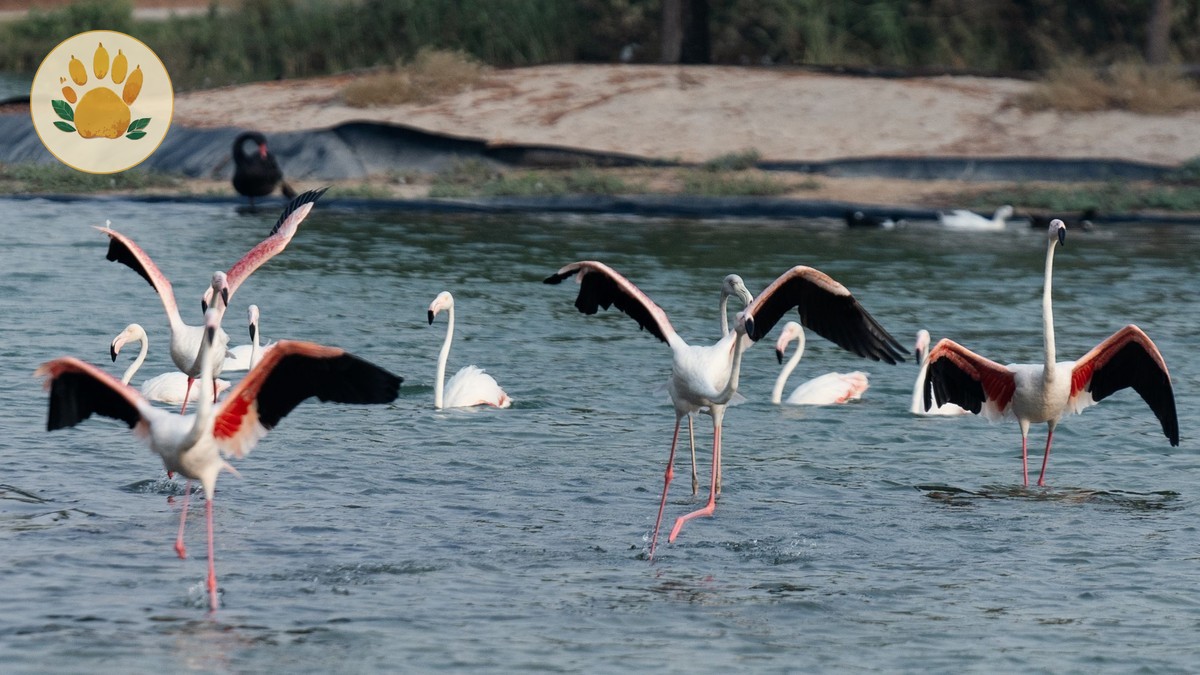
Two flamingo species share Kenya’s Rift Valley lakes, and from a vehicle 200 meters away they can look like one pink smudge. Learning greater flamingo vs lesser flamingo identification changes how you plan a shoot. The species differ in size, color, bill shape, diet and even which lake they favor this season. Get the differences right and you will know where to point your lens before the light goes flat.
Greater Flamingo vs Lesser Flamingo Identification: Size and Structure
The greater flamingo (Phoenicopterus roseus) is the giant of the two, standing 1.2 to 1.5 meters tall with a wingspan close to 1.5 meters. It has a long neck, long pink legs and a heavier body.
The lesser flamingo (Phoeniconaias minor) is noticeably smaller, standing 80 to 90 centimeters tall, roughly two-thirds the height of its cousin. In a mixed flock, size alone often settles the identification before you check color or bill shape.
Plumage Color and Why It Differs
Both species get their pink color from carotenoid pigments in the algae and small invertebrates they eat. The intensity depends on diet, not species alone, but there are consistent patterns.
Greater flamingos tend toward pale pink or almost white bodies. Brighter pink patches show on the wing coverts, and black flight feathers stand out clearly in flight. Lesser flamingos usually carry a deeper, more saturated pink across the whole body, sometimes shading into a rich reddish tone, especially during breeding condition.
Bill Shape and Color
This is the fastest field mark once you are close enough to use it. The greater flamingo has a pink bill with a sharp black tip and a strong downward kink partway along its length.
The lesser flamingo’s bill looks almost entirely dark, a deep maroon to blackish red, and appears uniformly dark from any distance. The curve is deeper, and the bill is shorter and stockier. It is built for filtering far finer particles than the greater flamingo’s bill can manage.
Eye Markings and Bare Skin
Look at the face next. Lesser flamingos have a ring of dark red bare skin around the eye, which gives them a sharper, more intense stare in photographs. Greater flamingos have pale yellow eyes and far less bare skin around them, giving the face a softer look.
Diet and Feeding Technique
The two species rarely compete for food, which is exactly why they can share a lake without conflict.
Lesser flamingos filter blue-green algae, mainly spirulina, using extremely fine lamellae inside the bill. They feed with the head upside down near the surface, sometimes while swimming, sifting water at a rapid pace.
Greater flamingos wade in deeper water and stir the mud with their feet before filtering it through coarser lamellae. They take small invertebrates, brine shrimp, insect larvae and seeds rather than algae alone. This is why greater flamingos often stand apart from the dense pink rafts of lesser flamingos, working the shallows on their own.
Habitat and Geographic Range
The greater flamingo has a wide range, found across Africa, southern Europe, the Middle East and South Asia. It tolerates a broader range of wetlands, not just soda lakes.
The lesser flamingo is far more specialized. Most of the world’s population depends on the alkaline soda lakes of the East African Rift Valley. A smaller population lives around lakes in India and Pakistan. That narrow habitat requirement is part of why its numbers are more exposed to change on any single lake.
Where to See Them in Kenya Right Now
Flamingo numbers move between lakes from year to year, driven by water levels and algae blooms. No serious birder treats any one lake as a sure thing.
Lake Nakuru was famous for enormous flamingo flocks through the 1990s and early 2000s. Rising water levels through the 2010s diluted the alkalinity and reduced the algae bloom, and flamingo numbers there dropped sharply. Some birds have returned in recent seasons, but Nakuru is no longer the guaranteed spectacle it once was. Check current Lake Nakuru National Park entry fees before planning a visit, since KWS fees changed in October 2025.
Lake Bogoria is about 280 kilometers and four to four and a half hours from Nairobi. It has become the more consistent bet for large congregations, particularly lesser flamingos drawn to its hot spring-fed algae blooms. Lake Elementaita, smaller and closer to Nairobi, still holds reliable numbers of both species and works well as a stop between Nairobi and Nakuru. Lake Natron, across the border in Tanzania, is the only regular breeding site for lesser flamingos in East Africa. The drive there from Nairobi runs through Namanga and takes the better part of two days.
| Lake | Distance from Nairobi | Drive time | Non-resident park fee | Best for |
|---|---|---|---|---|
| Lake Nakuru National Park | 160 km | 2.5-3 hours | USD 90/adult/day (KWS) | Recovering numbers, easy access |
| Lake Elementaita | 120 km | 2 hours | No park fee, conservancy access varies | Reliable mixed flocks, quieter shoreline |
| Lake Bogoria National Reserve | 280 km | 4-4.5 hours | Indicative KES 1,000-2,000/adult/day, confirm locally | Largest current lesser flamingo counts |
| Lake Natron, Tanzania | approx. 430 km via Namanga | 8-9 hours over two days | Indicative USD 50-60/adult/day, confirm locally | Lesser flamingo breeding colonies |
Population Size and Conservation Status
The lesser flamingo is listed as Near Threatened by the IUCN. The global population is estimated between 2 and 3 million birds, and the great majority are concentrated on a handful of East African lakes. That concentration makes the species vulnerable to changes at any single site.
The greater flamingo is listed as Least Concern. Its wider range and more varied diet give it more resilience against local habitat shifts.
Breeding Behavior and Colony Size
Both species nest colonially, building mud cones on open mudflats away from predators. Lesser flamingos breed almost exclusively at Lake Natron, where colonies have numbered in the hundreds of thousands in strong years. Breeding attempts fail in poor rainfall years, when the lake floods the nesting islands.
Greater flamingos breed more sporadically across several Rift Valley lakes, in smaller, scattered colonies rather than one dominant site. Courtship displays, head-flagging and synchronized marching, are worth watching for in the weeks before nesting begins, and they photograph well against calm water.
Best Time of Year to See Flamingos
Dry months generally concentrate algae and shrink the shallows, pulling flamingos into denser, more photogenic groups. June through September and January into February tend to offer the best combination of bird numbers and manageable roads.
For photographers, early morning and late afternoon light flatters the pink plumage and reduces harsh reflection off the water. Wind matters too. Calm mornings on Bogoria or Elementaita give still water and clean reflections. Afternoon wind on the Rift Valley floor can kick up dust and ripple the surface.
The SafariPure Difference
SafariPure builds flamingo itineraries around current lake conditions, not last year’s photos. Our guides check water levels and algae reports before confirming which lake to target. We adjust vehicle routing so you are not driving four hours to an empty shoreline.
Vehicles for bird photography come with beanbag rests and low door lines for a clean sightline. The schedule builds in enough patience to wait out the light rather than rush the shot. A flamingo lake morning pairs naturally with a wider Kenya circuit. Our guides can route you through some of the best wildlife spotting locations in Kenya, or extend south toward the Mara. Our guide to viewing Nile crocodiles on the Mara River covers a very different kind of patience-driven shoot.
Plan Your Flamingo Safari
If you want current, honest advice on which Rift Valley lake has the birds this season, reach out through our contact page. We will help you build an itinerary around what the lakes are actually doing right now, not what they did five years ago.