
You booked a tented camp in the Maasai Mara. Then you read that it has no fence. Now you are picturing a lion pushing its nose against the canvas at 2am while your kids sleep three feet away.
That worry is normal. It is also answerable with facts, not just reassurance. This guide looks at whether a safe sleep unfenced safari tent is really possible, not just marketing talk. Let’s go through what actually happens at night in an unfenced camp, why it works, and where the real limits are.
Safe sleep unfenced safari tent: is it actually safe
Yes, with a qualifier: it is safe when the camp follows its protocols and you follow the rules staff give you. Thousands of guests sleep in unfenced camps across the Mara, the Serengeti, and Laikipia every night of the year without incident. Camps like those in Mara Naboisho Conservancy and Mara North Conservancy have operated without perimeter fences for decades.
The safety does not come from a barrier. It comes from behavior, both animal and human. Lions and elephants have learned that camps are not worth investigating. Staff manage the small risks that remain. That system has a strong track record, but it is a system, not a guarantee, and this piece will be honest about the difference.
What makes safari tents different from ordinary camping tents
A safari tent is not the dome tent you pitch at a campsite back home. Most permanent tented camps use a steel or hardwood frame, thick reinforced canvas walls, a solid groundsheet, and a zippered inner mesh layer plus an outer canvas layer. Many now sit on raised wooden decks with a proper door frame and lockable zip pulls.
None of this is animal-proof in the way a brick wall is. A determined elephant could, in theory, walk through canvas. The point is different: the tent removes visual and scent triggers that might interest a predator, and it gives you a solid, closed space so you are not an exposed sleeping shape on open ground. Combined with camp layout and staff routines, that is normally enough.
Why lions, elephants, and hyenas rarely approach tents at night
Wild predators are conservative with their energy. A lion spends most nights avoiding unfamiliar structures, human scent, and generator noise, because none of those things look like food. Camps are built with this in mind. Tents are usually spaced 15 to 40 meters apart, kitchens and food stores sit well away from sleeping tents, and lighting is kept low but present along main paths.
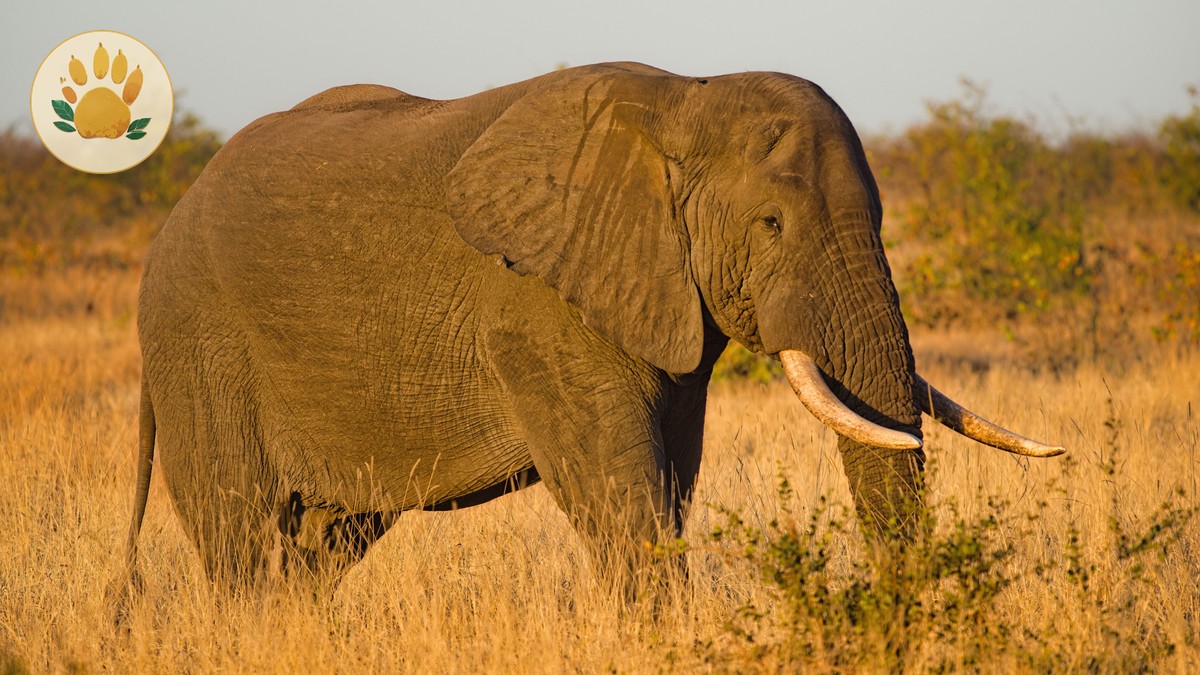
Elephants pass through camps more often than lions do, usually browsing on vegetation between tents rather than approaching them directly. Hyenas will scavenge scraps if food is left out, which is exactly why every camp bans food and toiletries with strong scents inside tents. Take away the incentive, and animals treat a camp as terrain to move through, not a target to investigate.
Staff protocols: night guards, torch escorts, and radios
This is the part that actually keeps the safe sleep unfenced safari tent model working, and it is worth understanding in detail rather than taking on faith.
At camps in Mara Naboisho and Mara North, a night guard, called an “askari” in Kiswahili, is posted at camp from dusk until the last guest is escorted in. If you need to move between your tent and the mess area after dark, you do not walk alone. You call for an escort, either by radio left in your tent, an air horn, or by shouting for the guard on duty. The askari walks you with a torch, checking the path ahead, and waits until you are inside with your zip closed.
Guides and camp managers carry radios connected to a central point, so if an animal is spotted near tents, the alert reaches every staff member within seconds. Most camps also do a final “sweep” of the walkways around 10 or 11pm before quiet hours begin.
The safety briefing every guest gets on arrival
Every reputable operator delivers this briefing within an hour of your arrival, usually before your first game drive. It typically covers:
- How to use your tent’s escort signal (radio, horn, or whistle)
- Where the guard station is relative to your tent
- What to do if you hear an animal close by
- Why the tent must stay zipped, day and night
- Food and toiletry storage rules
- What time “lights out” walking restrictions begin
If a camp skips this briefing, or rushes it, treat that as a warning sign about their broader standards. Our guide to vetting a safari operator’s safety standards covers what else to check before you book.
Rules guests must actually follow
The system only works if guests follow it. The rules are simple:
- Keep the tent zipped shut whenever you are inside, day or night.
- Never store food, fruit, or strong-smelling toiletries inside the tent.
- Never walk to another tent or the mess area alone after dark. Always call for an escort.
- If you hear an animal outside, stay still and quiet inside the tent rather than looking out or stepping outside.
- Follow the specific curfew time your camp sets, which is often 30 minutes after sunset.
Families should walk children through these rules directly, in language they will remember at 1am if woken by a noise.
Nighttime sounds and insects are usually the real disturbance
Most guests who report a rough night mention noise, not danger. A lion roaring half a kilometer away sounds like it is at the tent flap. Hippos grunting near a river camp can be startling the first time. Hyenas whoop. Elephants rumble low enough to feel through the ground.
None of this means an animal is near your tent. Sound travels far and flat across savanna at night. Camps in riverine settings, like those along the Talek River in the Mara, tend to have more hippo and insect noise than camps set back on open plains. If sound sensitivity is a concern for your family, ask the operator about tent placement relative to water before booking.
Fenced vs unfenced camps compared
Fencing is mostly a policy choice tied to land type, not a universal safety standard. National reserves like the Maasai Mara National Reserve generally prohibit permanent fencing inside the reserve. Private conservancies bordering it, such as Naboisho and Mara North, also run unfenced by design, to keep the land open for wildlife movement. Some lodges on private land, particularly in areas with higher human-wildlife conflict such as parts of Amboseli, use electric perimeter fencing instead.
| Feature | Unfenced tented camp (e.g. Mara Naboisho) | Fenced lodge (e.g. select Amboseli properties) |
|---|---|---|
| Typical nightly rate (per person, high season) | USD 450 to 900 | USD 250 to 600 |
| Guest density | Low, often 8 to 16 tents | Higher, 30+ rooms common |
| Night movement rule | Escort required after dark | Often free movement within fence |
| Wildlife proximity | High, animals pass through camp | Lower, animals stay outside fence |
| Distance to nearest airstrip | Naboisho Airstrip, roughly 10 to 20 minutes by road | Amboseli Airstrip, roughly 15 to 30 minutes by road |
| Conservancy or park fee (indicative, per person per night) | USD 70 to 100 (conservancy fee) | USD 60 to 80 (park entry, varies) |
Fenced does not mean risk-free, and unfenced does not mean reckless. It is a genuine trade-off between wilder access and a lower-friction night routine.
Are children safe in unfenced tented camps
Most family-friendly unfenced camps set a minimum age, commonly 6 or 8 years old, precisely because the escort system depends on a child understanding and following instructions calmly. Below that age, many families choose fenced lodges or camps with family tents that connect two rooms behind one zip, keeping children within arm’s reach all night.
If you are traveling with younger children, ask your operator directly which camps in their portfolio set no minimum age and why. Camps that welcome very young children usually pair that policy with extra staffing at night, not looser rules.
Rare exceptions and honest caveats
Most safari safety pages stop at reassurance. It is worth being direct instead: incidents do happen, rarely, and mostly involve guests breaking the rules above. There have been documented cases across East and Southern Africa of predators killing prey animals, such as impala or warthog, inside camp grounds overnight, discovered by staff at dawn. This confirms predators do enter camp perimeters. It is not the same as a predator entering an occupied tent, which remains exceptionally rare and, in most documented cases, followed a guest leaving a tent unzipped or walking outside alone at night.
This is why the rules exist, and why an escort is not a formality. For a broader view of risk across different dangerous species, see our general safari safety guide for dangerous animals. If you want to understand how professional guides manage far closer wildlife proximity on foot, read about what it’s like being on foot near predators on a walking safari.
Questions to ask your operator before booking an unfenced camp
- What is the minimum age for children at this specific camp?
- What is the exact night escort protocol, and is it available 24 hours?
- How far apart are the tents, and where is the nearest guard station?
- Has this camp had any wildlife incidents in camp grounds in the past two years?
- Is there a radio, horn, or whistle in every tent?
- What is the curfew time for unescorted movement?
A confident, specific answer to each of these tells you more than any brochure claim about “reinforced canvas.”
The SafariPure Difference
We only place families in unfenced camps that match the child’s age and temperament to the camp’s actual protocol, not just its marketing. Before we confirm a booking in Naboisho, Mara North, or similar conservancies, we ask the operator every question on the list above ourselves, and we tell you plainly if a camp’s night routine does not suit young children or nervous first-timers. Where a fenced lodge is genuinely the better fit for your family’s comfort, we will say so, even if it costs less.
Plan your trip
If you are weighing an unfenced tented camp against a fenced lodge for your family’s Kenya trip, we can walk you through the real trade-offs camp by camp. Visit our contact page to start planning, or browse our Maasai Mara safari tours to see current camp options.