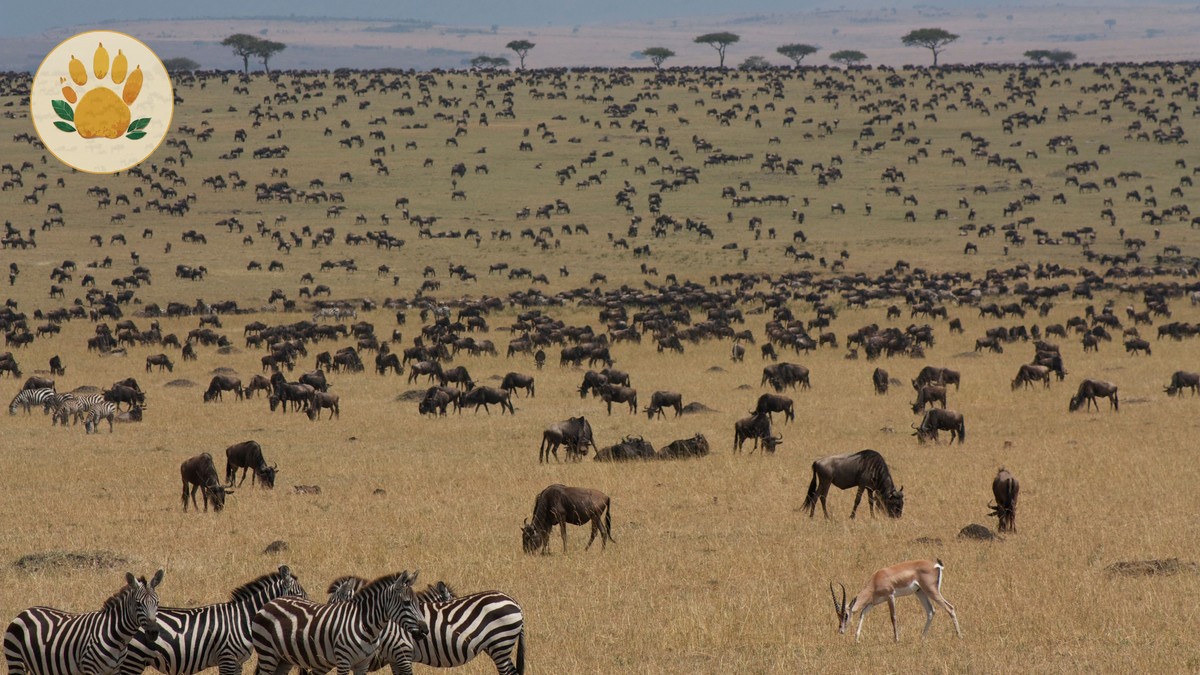
The Great Migration is one circuit, not two separate events. Around 1.5 million wildebeest, plus hundreds of thousands of zebra and gazelle, move in a rough circle through the Serengeti and the Masai Mara every year. Getting wildebeest migration Kenya vs Tanzania timing right means matching your travel dates to the right stretch of that circuit, not picking a country. The question for a first-time traveler is not which country “has” the migration. It is which stretch of that circuit you want to watch, and whether your travel dates match it.
This guide breaks the timing down month by month, compares real costs and fees, and gives you a straight answer on where to book, without pretending crossings can be scheduled like a train.
What Is the Great Wildebeest Migration
The herds follow rainfall, not a calendar. They graze the short grass of the southern Serengeti during the wet season, then push north as that grass dries out, cross the Grumeti and Mara Rivers, spend a few months in the Masai Mara, and turn back south before the rains return. The route covers roughly 800 km over a year and never repeats exactly the same way twice.
That unpredictability is the whole story behind Kenya vs Tanzania planning. Tanzania holds the migration for about eight months of the year. Kenya hosts it for three to four, concentrated and dramatic. Neither fact makes one country better. It makes them suited to different trips.
Month-by-Month Migration Calendar
| Months | Herd location | Country |
|---|---|---|
| December-March | Calving season, southern Serengeti plains (Ndutu area) | Tanzania |
| April-May | Herds move north through central Serengeti | Tanzania |
| June-July | Grumeti River crossings, Western Corridor | Tanzania |
| Late July-September | Mara River crossings north into the reserve | Kenya (and Serengeti’s Kogatende area) |
| August-October | Herds settled across the Masai Mara | Kenya |
| October-November | Mara River crossings back south | Tanzania |
| November-December | Return south toward the Serengeti plains | Tanzania |
If you want to check the current wildebeest migration location before you commit to dates, do it two to three weeks before travel. Herd movement can shift by weeks in either direction depending on rainfall that year.
Best Time to See the Migration in Kenya
The Masai Mara only holds the migration reliably from around late July through October. Outside that window, you are looking at Kenya’s resident wildlife, which is still very good, but not the migration.
Within that window, early August through mid-September is when Mara River crossings happen most often, since the herds are fresh across the border and still restless. By late September and into October, many wildebeest have settled into grazing and crossings become less frequent, though the reserve is still full of animals. If your dates fall earlier, read up on migration arrival timing in June, since some years the front of the herd reaches the Mara border before the main crossing season begins.
Masai Mara National Reserve is run by the Narok County Government, not Kenya Wildlife Service, and its fee structure changes with the season. Non-resident park fees are USD 100 per adult per day from January through June, rising to USD 200 per adult per day from July through December, which covers the whole peak migration window. Private conservancies bordering the reserve, such as Naboisho and Mara North, run roughly USD 80 to 150 per person per night, usually built into the lodge rate rather than billed separately.
Best Time to See the Migration in Tanzania
Tanzania’s advantage is spread. The Serengeti holds some part of the migration nearly year round, so your travel dates are less likely to miss it entirely.
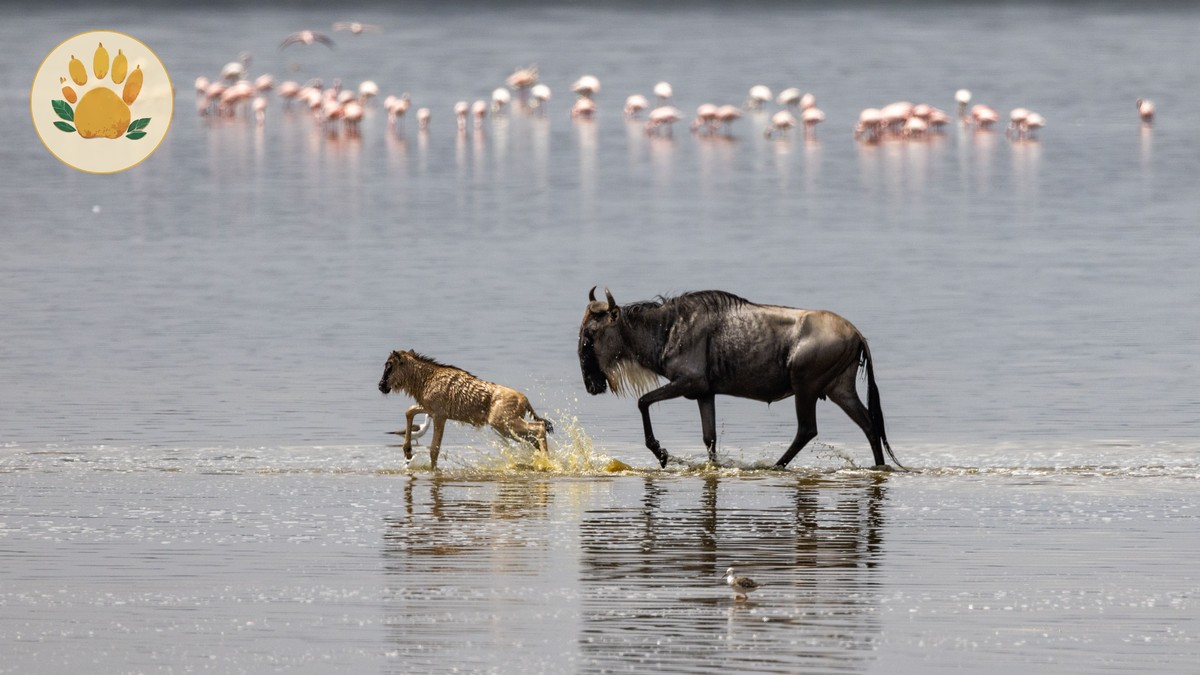
Calving season, from December through March, is the standout window many first-time travelers overlook. Over 8,000 wildebeest calves can be born in a single day on the Ndutu plains, and predator activity follows closely. It is a different kind of drama from a river crossing, quieter but constant, and the southern Serengeti is far less crowded than the Mara in August.
Grumeti River crossings in June and July are smaller than the Mara crossings but still genuine river crossings, with fewer vehicles watching. Serengeti National Park entrance fees for non-residents fall in the range of USD 70 to 82 per adult per day, though this is an indicative figure and you should confirm the exact rate with TANAPA before booking, since Tanzania periodically adjusts park fees.
Mara River Crossings: Kenya Side vs Tanzania Side
The Mara River itself runs through both countries, and crossings happen on both banks depending on the month.
From late July into September, herds typically cross northward, out of Tanzania’s Kogatende area and into Kenya’s Masai Mara. This is the crossing season most photographs and documentaries show, with steep banks, crocodiles, and thousands of animals bunched at a handful of known crossing points like Lookout Point and Purungat.
From October into November, the same herds cross back south into Tanzania as the rains return to the Serengeti. These southbound crossings are just as real but draw far fewer vehicles, simply because fewer travelers plan around them.
Neither side can guarantee a crossing on any given day. Wildebeest gather at the riverbank, sometimes for hours, before a crossing starts or the group loses its nerve and disperses. A four to five night stay during peak season gives you good odds, not a guarantee.
Crowds and Wildlife-Viewing Experience Compared
The Masai Mara is roughly 1,510 square km. The Serengeti, including the Ngorongoro Conservation Area’s connected ecosystem, covers over 14,750 square km. That size difference shapes the whole experience.
During August and September, popular Mara crossing points can draw twenty or more vehicles to a single crossing. Private conservancies around the reserve offer a quieter alternative, with limited vehicle numbers written into their operating agreements. The Serengeti’s sheer size means crowds concentrate less, though popular Ndutu camps and central Seronera can still feel busy during calving season.
If crowd-free viewing matters more to you than concentrated action, Tanzania’s Western Corridor or Kenya’s conservancies are better fits than the main Mara reserve in peak crossing weeks.
Cost Comparison: Kenya vs Tanzania Migration Safari
| Factor | Masai Mara, Kenya | Serengeti, Tanzania |
|---|---|---|
| Non-resident park fee | USD 100/day (Jan-Jun), USD 200/day (Jul-Dec), Narok County | USD 70-82/day (indicative, confirm with TANAPA) |
| Nearest gateway airport | Nairobi (Wilson Airport), ~45-min flight to Mara airstrips | Kilimanjaro or Arusha, ~2.5-3 hr flight to Seronera/Kogatende |
| Mid-range camp rate | USD 350-600/person/night, full board | USD 300-550/person/night, full board |
| Peak crossing months | Late July-September | June-July (Grumeti), October-November (return crossing) |
| Typical crowd density at peak | High at named crossing points | Moderate, spread across a larger park |
Overall, a like-for-like week-long trip in peak season runs somewhat higher in Kenya, mainly because of the July-December Mara fee increase and shorter flight-to-camp logistics that push camps toward premium pricing. For Kenya’s other parks, current Kenya park entry fees are worth checking if you plan to combine the Mara with Amboseli or Tsavo.
Accommodation and Camp Infrastructure Differences
Masai Mara camps cluster tightly around the reserve and its conservancies, which keeps drive times to the action short, often under 30 minutes. Tanzania’s migration follows the herds across a much larger area, so many camps are seasonal or mobile, moving with the wildebeest between the southern plains, Western Corridor, and northern Serengeti through the year.
That mobility is a genuine advantage for repeat visitors chasing a specific event, like calving or the Grumeti crossings, since the camp itself relocates close to where the action is that month.
Wildebeest Migration Kenya vs Tanzania Timing: Which Destination to Choose
If your dates are fixed to July, August, or September, and you want the best odds of watching a Mara River crossing, choose Kenya. If you can travel between December and March, or prefer a quieter, more spread-out experience across a bigger landscape, choose Tanzania.
Combining both is possible on longer trips of 10 days or more, since Nairobi and Arusha are a short flight apart, but it adds cost and driving or flying time that shorter trips cannot absorb.
The SafariPure Difference
Most migration guides give you a static monthly range and leave it there. We pair that calendar with a live tracker built from current ranger and guide reports, so your dates get checked against where the herds actually are, not just where they usually are. We also work directly with camps in both the Masai Mara conservancies and the Serengeti’s Western Corridor, which means we can place you where the crowds thin out, not just where the guidebooks point.
Booking Timing and Travel Tips
Book six to nine months ahead for peak Mara crossing season, since conservancy camps in particular sell out early for August and September. Serengeti calving season camps in the Ndutu area fill up nearly as fast for December through February. Shoulder months, like May or November, offer lower rates and thinner crowds, with the trade-off of lower odds of a river crossing.
Pack for cool mornings even in dry season. Both the Mara and Serengeti sit above 1,500 meters, and open-vehicle game drives before sunrise are colder than most first-time travelers expect.
Plan Your Migration Safari
Whichever side of the border fits your dates, timing is the difference between a good trip and a great one. Talk to SafariPure about your travel window and we will match it against current herd movement before you book.