Most first-time safari guests spend their first game drive worried about saying the wrong thing. They sit quietly, camera ready, and let the guide narrate without interruption. That is a missed chance. Knowing the right questions to ask your safari guide during a game drive changes what you see and learn. A good Kenya safari guide has spent years reading tracks, radio chatter, and animal behavior, and the questions you ask shape how much of that knowledge reaches you.
This is not a checklist for booking a trip. It is a script for the vehicle itself, organized by the moment it actually comes up: the dawn briefing, the sighting, the radio call, the drive back to camp.
What to expect on a game drive before you ask anything
Most camps run two drives a day. The morning drive leaves before sunrise, usually between 6:00 and 6:30 am, and lasts three to four hours. The afternoon drive leaves around 4:00 pm and runs until dusk, close to 7:00 pm. Vehicles are open-sided 4×4 Land Cruisers or Land Rovers, usually with tiered seating so everyone gets a clear view over the roofline.
If this is your first outing, read what to expect on your first game drive before you go. Knowing the rhythm of the drive, when the vehicle stops, when it moves on, when the guide radios another car, makes it much easier to time your questions well.
Ask about the plan at the start, not halfway through. A simple “what are we hoping to find this morning, and where are we headed first” tells you the guide’s strategy and gives you a reason to ask follow-up questions later, when the plan changes because of a fresh leopard track or a call from another vehicle.
Questions to ask your safari guide about wildlife, tracking, and identification
This is where a guide’s field experience actually shows. Ask specific, not vague, questions:
- “How did you know to check this riverbed?” Guides read drag marks, dung freshness, and bird alarm calls, and most are glad to explain the logic.
- “Is this behavior normal, or unusual for the time of day?” A pride resting at midday is normal. A pride moving and vocalizing at midday usually means something, a kill nearby, a rival male, cubs being moved.
- “Can you identify that bird or plant too?” Many guides trained for the big five can also name over 200 bird species and the trees animals depend on, like the whistling thorn acacia that hosts symbiotic ants. Asking shows you want the fuller picture, not just lion counts.
If you are unsure whether it is appropriate to ask the vehicle to move closer or wait longer at a sighting, ask directly: “Is it okay to sit here a bit longer, or should we move on for others waiting?” Guides in the Masai Mara coordinate closely by radio to avoid too many vehicles crowding one sighting, so the honest answer sometimes depends on who else is on the way.
Guide qualifications and experience worth asking about
It is not intrusive to ask about training. Most Kenyan guides are certified through the Kenya Professional Safari Guides Association (KPSGA), which grades guides Bronze, Silver, or Gold based on written exams, field assessments, and years of experience. A Silver or Gold guide typically has a decade or more of daily fieldwork behind them.
Reasonable questions include:
- “How long have you been guiding in this specific conservancy?”
- “What’s your KPSGA grade?”
- “Have you worked here through different seasons, or mainly during migration months?”
None of this is rude. Guides are proud of their qualifications, and the answer tells you how much local, season-specific knowledge you are working with.
Group size, shared vs. private vehicles
The number of people in your vehicle changes what you can ask for. A shared game drive vehicle in the Masai Mara typically carries 5 to 7 guests plus the guide, and the drive plan has to accommodate everyone’s interests. A private vehicle, usually booked for a single family or couple, lets you set the pace: linger longer at a sighting, skip one that does not interest you, or ask to head toward a specific animal.
If this flexibility matters to you, ask about it before booking, not once you’re in the vehicle. Read more on asking about shared vs. private vehicle group sizes to weigh the cost difference against what you’ll actually gain from it.
| Option | Typical group size | Flexibility to change route | Rough added cost |
|---|---|---|---|
| Shared vehicle | 5 to 7 guests | Low, group consensus needed | Included in standard rate |
| Private vehicle | 1 to 4 guests (your party) | High, guide follows your interest | Indicative USD 60 to 150 per day, camp-dependent |
| Private vehicle, specialist guide | 1 to 4 guests | High, plus deeper species knowledge | Indicative USD 100 to 250 per day, camp-dependent |
Prices vary by camp and season, so treat the figures above as a planning range, not a quote.
Tipping etiquette for guides
Tipping is expected in Kenya and guides rely on it as a meaningful part of their income. As a rough guide, plan for USD 15 to 20 per guest per day for a shared vehicle guide, or KES 2,000 to 2,600 at current exchange rates. For a private guide working closely with just your party over several days, USD 20 to 25 per guest per day is reasonable.
Ask your camp manager or guide directly if you are unsure whether tips are pooled among staff or given individually, since practice varies by camp. It is a normal question, not an awkward one. For the bigger picture on where guide fees fit into your total trip cost, see how guide fees and tipping factor into your safari price.
Practical questions worth asking mid-drive
A few logistics questions make the day smoother and rarely feel out of place:
- “What time will we head back, and is there a bathroom stop planned?” Most drives include one stop, often at a designated point rather than in the open bush, for safety reasons.
- “If an animal approaches the vehicle, what should we do?” The honest answer is usually simple: stay seated, stay quiet, and let the guide handle positioning. Elephants and lions generally treat a vehicle as one large, uninteresting object, not as separate people, as long as everyone stays inside it.
- “Where should I sit for the best photos this morning?” Guides know which side the sun will be on and where sightings are more likely, and they will happily suggest a seat if you ask early rather than after missing a shot.
- “What’s that call on the radio about?” Guides in shared conservancies like Naboisho and Mara North coordinate constantly. Asking what a radio call means often reveals a sighting building elsewhere that you can still reach.
The SafariPure Difference
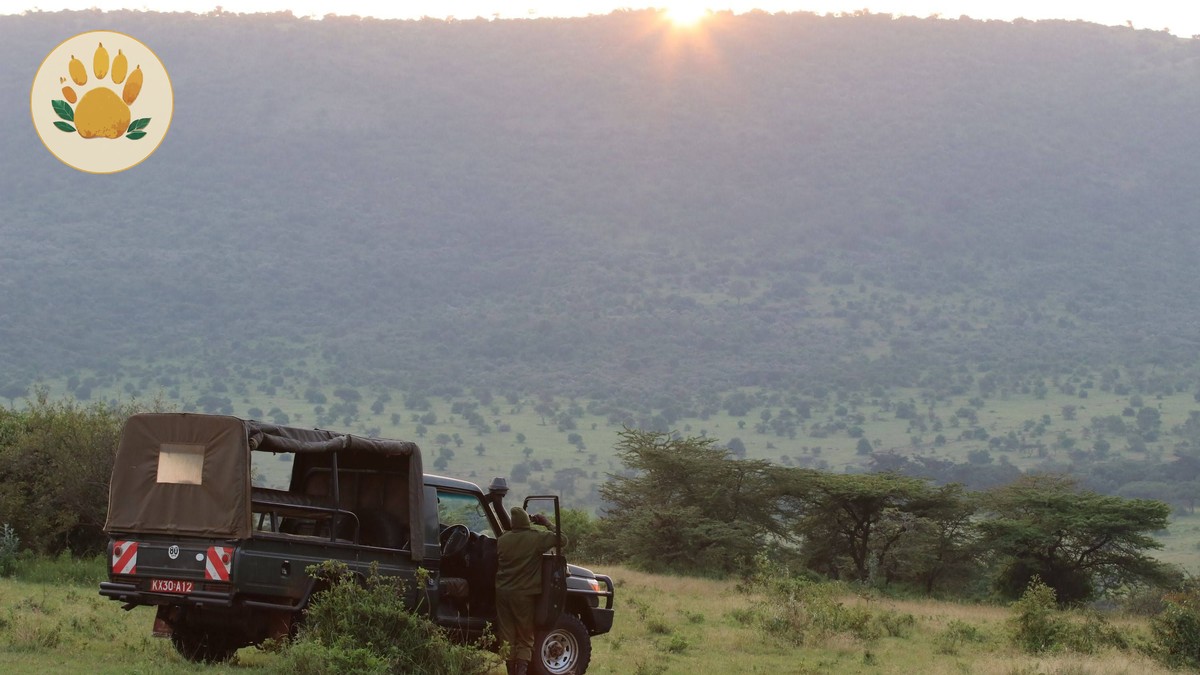
Every SafariPure guide holds a KPSGA Silver or Gold qualification and has worked the same conservancies for years, not months. That matters because tracking, radio coordination, and honest answers to guest questions depend on local memory, not general training. On a recent Naboisho Conservancy drive, a guest asked our guide why he had stopped checking an open plain and turned toward thicker brush instead. He explained he had heard a specific alarm call from a nearby troop of vervet monkeys, a signal he had learned to associate with leopard movement over eight seasons in that exact stretch of bush. Twenty minutes later, the vehicle was parked beside a leopard resting in a sausage tree. That is the value of asking, and of a guide who has the years behind him to answer well.
Plan your questions before you go
The best game drives come from guests who ask, not just observe. If you are planning a Kenya safari and want a guide who welcomes those questions rather than tolerating them, get in touch with SafariPure to start planning your trip.