The small group joining safari Kenya benefits are real, but so are the trade-offs. A small group joining safari puts you in a shared Land Cruiser with five or six strangers, a fixed departure date, and a set route through Masai Mara, Lake Nakuru, and Amboseli. You do not choose your travel companions. You do not choose your wake-up time. What you get in return is a price that a solo traveler on a private safari simply cannot match.
This is the honest version of that trade. Not a list of ten reasons group safaris are great, but a real ledger of what you gain and what you hand over to get it.
What a Group Joining Safari Actually Is
A joining safari means you book a seat on a scheduled trip that other travelers have also booked, rather than hiring a vehicle and guide for yourself. The operator sets the departure date, the route, and the daily schedule. You show up in Nairobi, meet your group, and travel together for the length of the trip, usually five to eight days.
This is different from an overland truck tour, which can carry 12 to 24 people through several countries over weeks. A small group safari in Kenya typically stays within one country, lasts under two weeks, and keeps the vehicle count low enough that everyone gets a window seat.
Small Group Joining Safari Kenya Benefits
Lower Cost Per Person
Park fees, fuel, and the driver-guide’s daily rate get split across everyone in the vehicle. A private safari for two people pays the same fuel bill as a group safari for six, but the group splits it six ways. This is the single biggest reason budget travelers choose fixed departure group safaris that cut costs over private hires.
As one concrete example: Masai Mara entrance fees alone run USD 200 per adult per day from July through December, the peak migration season, and USD 100 per day from January through June. Split six ways on a shared vehicle, that fee stops being a trip-breaker.
Built-In Company
Solo travelers and couples often find the social side is the real draw, not the discount. Eight hours a day in a truck with the same five or six people, watching the same herds cross the same rivers, tends to produce actual friendships by day four. If you are traveling alone through Kenya on a backpacker budget, a joining safari solves the isolation problem that independent travel can create.
Logistics Handled
Someone else has already worked out the route between Nairobi, Lake Nakuru, and the Mara. You do not need to negotiate matatu fares, figure out which bus goes to Narok, or find a driver who knows the unmarked tracks into the conservancies. For travelers weighing independent travel versus a guided group safari, this is often the deciding factor. Public transport can get you as far as Narok town, roughly 150 km and three hours from Nairobi, but the last stretch into the reserve needs a 4×4 and a guide who knows the tracks.
Group Size and Vehicle Type
Not all “group” safaris are the same size. This matters more than most comparison pages admit.
| Trip type | Typical group size | Vehicle | Seats per row |
|---|---|---|---|
| Small group joining safari | 4 to 8 travelers | Toyota Land Cruiser or minibus | 2 to 3, pop-top roof |
| Mid-size scheduled safari | 8 to 14 travelers | Extended safari van | 2 to 3, pop-top roof |
| Overland truck tour | 12 to 30 travelers | Custom overland truck | Bench seating |
| Private guided safari | 1 to 6 (your own party) | Land Cruiser, exclusive use | Your choice |
A vehicle with 6 to 8 seats means everyone gets a window on game drives, and the pop-top roof gives standing room for photos without the scrum you get in a 20-person truck. That is the range worth asking about when you book, not just “small group” as a marketing phrase.
Accommodation and Meals
Most Kenya group joining safaris use one of three accommodation styles, and budget travelers usually pick between the first two:
- Public campsites: Shared campsites near park gates, own or rented tent, shared ablution blocks. Cheapest option, roughly USD 15 to 30 per person per night including camping fees.
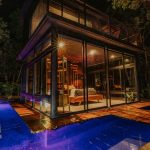
- Budget tented camps: Semi-permanent canvas tents with real beds, shared or en-suite bathrooms, inside or near the conservancy. Around USD 40 to 90 per person per night.
- Mid-range lodges: Solid rooms, buffet meals, pool. Around USD 100 to 220 per person per night.
Meals on group itineraries are usually included and eaten together, breakfast before the early game drive, lunch back at camp or as a packed box, dinner as a set menu. Dietary requests are possible if you flag them at booking, but the kitchen is cooking for the whole group, not customizing per plate.
Pricing by Budget Tier
Actual per-person prices vary by operator, season, and how many nights you spend inside the Mara versus outside it. These are indicative ranges for a 5 to 6 day group joining safari covering Masai Mara, Lake Nakuru, and Amboseli, park fees included:
| Tier | Price per person (5 to 6 days) | Accommodation | Vehicle |
|---|---|---|---|
| Budget camping | USD 550 to 850 | Public campsite, shared tent | Shared minibus, 6 to 8 pax |
| Mid-range | USD 900 to 1,500 | Tented camp or budget lodge | Shared Land Cruiser, 6 to 8 pax |
| Comfort | USD 1,600 to 2,600 | Lodge, en-suite | Shared Land Cruiser, 4 to 6 pax |
These ranges assume travel in the January to June low season. Add roughly USD 300 to 500 per person if your dates fall in the July to December peak migration window, largely driven by the higher Mara entrance fee.
Group vs Private Safari
A private safari removes every trade-off listed above, at a price. You choose your own route, stop as long as you like at a leopard sighting, and skip the parts of the itinerary you find dull. You pay for the whole vehicle and guide regardless of how many people are in your party, which is why a solo private safari can cost two to three times what a group seat costs for the same nights.
If you are traveling with a partner or a small group of friends, the private option gets more competitive because you are already splitting the vehicle cost among yourselves. If you are traveling alone, the joining safari usually wins on price by a wide margin.
What You Give Up
This is the part most operator pages skip.
Fixed departure dates. You book a date the operator has already set, often two to six weeks out. If that date does not suit your visa timeline or flight availability, you wait for the next one.
No rerouting. If your group spots a cheetah with cubs ten minutes from camp on the way out, the vehicle does not turn around. The schedule was set before you arrived, and seven other people have a flight to catch on the last day.
Shared space, no choice of company. You will spend up to eight days in a vehicle with people you did not choose. Most groups get along fine. Some do not, and there is no way to know in advance.
Single supplement. Solo travelers usually pay extra to avoid sharing a tent or room with a stranger, typically 20 to 40 percent on top of the per-person rate. Skip the supplement and you may be paired with another solo traveler of the same gender.
Wake-up times are not negotiable. Game drives start early, often 6:30 am, to catch animals before the heat sends them into shade. On a group trip, that time is fixed for everyone, not just the keen photographers.
Departure risk. If an operator does not sell enough seats for a scheduled date, some reserve the right to cancel or merge it with another date. Check this before booking, and ask what the minimum group size is.
None of this makes a group safari a bad choice. It makes it a specific choice, one that trades control for cost. Knowing the trade in advance helps with avoiding itinerary fatigue on a fixed group schedule, since a day off the vehicle is not something you can improvise once you are on the road.
Who a Group Safari Suits
Solo travelers on a budget, couples who want company without paying for a whole vehicle, and first-time visitors to Kenya who would rather not plan every logistic themselves. Anyone comfortable with early mornings and shared space will do well.
Families with young children usually do not fit as neatly. Long days in the vehicle, fixed nap-unfriendly schedules, and no ability to cut a drive short for a tired toddler make a private safari the better call once kids are under six or seven.
The SafariPure Difference
We run small group joining safaris capped at 6 to 8 travelers per vehicle, not the 12 to 20 you find on the cheapest listings. Every group departure is confirmed with a named guide before you book, so you are not gambling on whether the trip will run. We publish our own per-day cost breakdown, including current KWS and Narok County park fees, rather than a single bundled number that hides what you are actually paying for. And we tell you the give-ups before you pay a deposit, not after you are already in the vehicle.
FAQs
What is a group joining safari? A scheduled safari where you book a seat alongside other travelers on a fixed route and date, splitting vehicle, guide, and park costs.
How many people are in a small group safari in Kenya? Usually 4 to 8 travelers per vehicle. Anything above 12 is closer to an overland truck experience.
Is a group safari cheaper than a private safari? Yes, for solo travelers and pairs. Vehicle and guide costs split across more people, cutting the per-person rate significantly.
What are the disadvantages of a group joining safari? Fixed dates, a set route with no rerouting, shared accommodation or a single supplement, and early wake-up times set for the whole group.
Are group safaris suitable for young children? Generally not ideal. Long fixed-schedule days suit adults and older children better than toddlers.
What happens if a departure does not fill up? Some operators cancel or merge low-booking dates. Confirm the minimum group size and cancellation policy before paying a deposit.
Can you customize the itinerary on a group safari? Not once the group departs. Route and stops are fixed. Private safaris allow full customization.
Plan Your Trip
If a small group joining safari fits your budget and your travel style, we can walk you through current departure dates, group sizes, and per-day costs. Visit our group safari tours page or reach out through our contact page to start planning.