Mzima Springs underwater hippo viewing is the reason to add Tsavo West to a second or third Kenya trip. If you have already done the Mara circuit and want something with more texture, this spot is worth a detour. It sits in Tsavo West National Park and holds a genuine oddity: a glass-walled chamber that lets you watch hippos and fish underwater, not just from the bank. It is the only setup of its kind in Kenya.
That said, it is not a guaranteed spectacle. Set your expectations before you go, and pair it with a wider Tsavo West game drive rather than treating it as a standalone trip.
What Mzima Springs is and where it sits
Mzima Springs is a cluster of freshwater pools in the northern section of Tsavo West, roughly 48 km from Mtito Andei Gate and about 240 km southeast of Nairobi, a four to five hour drive on the A109. If you are coming from Amboseli or the Chyulu Hills, it is closer, usually under two hours depending on the route and road conditions.
The springs feed the Tsavo River system and have supplied piped water to Mombasa since 1966, when colonial engineers ran a pipeline from here to the coast, over 200 km away. That pipeline still carries a meaningful share of Mombasa’s municipal water supply today.
Mzima Springs underwater hippo viewing: inside the chamber
The centerpiece is a glass-sided tank, partly submerged, reached by a short wooden walkway from the main pool. You climb down a few steps and look out through thick glass panels into the water itself, at eye level with whatever happens to be swimming past.
The structure dates back decades and has been patched and maintained rather than rebuilt, so do not expect a polished aquarium finish. The glass is sometimes clouded by algae or sediment, and visibility depends heavily on recent rainfall and water flow. On a clear day you can watch fish moving in loose shoals a few feet from the glass. On a murky day you may see little beyond your own reflection.
Wildlife you can expect to see
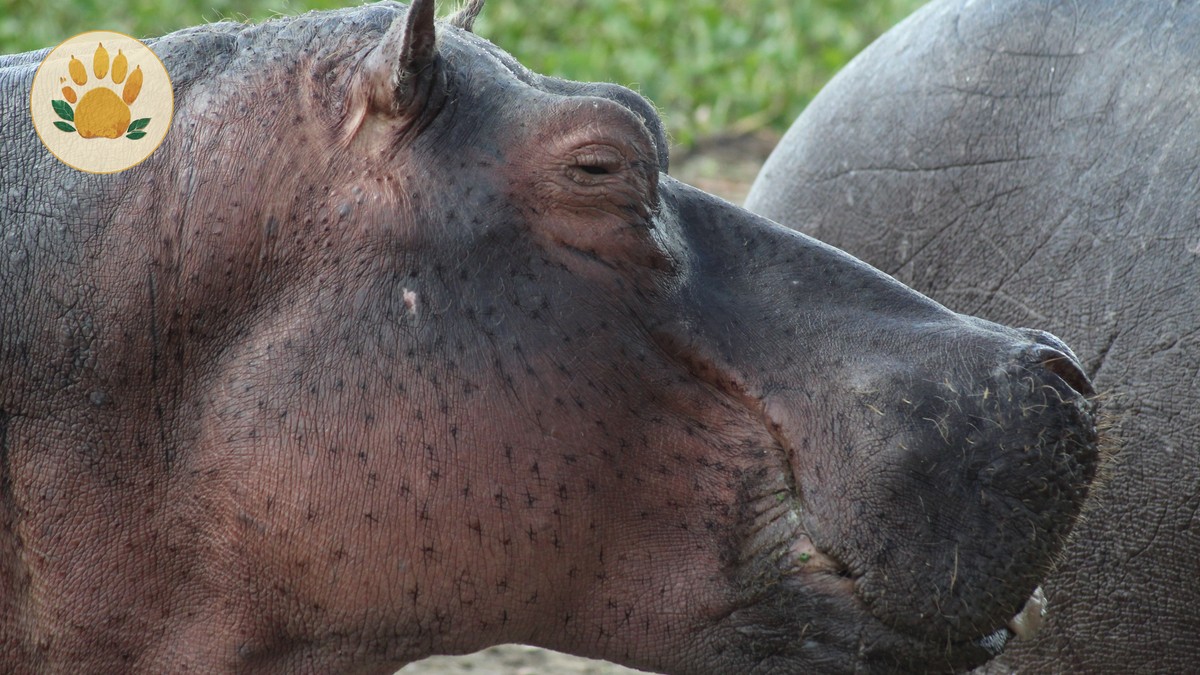
Hippos are the main draw, but they do not perform on command. They spend most daylight hours submerged or resting in deeper pools upstream, and there is no guarantee one will pass the viewing chamber during your visit. Guides at the site are candid about this: sightings are common but not certain.
Beyond hippos, look for:
- Nile crocodiles, often basking on the banks or drifting near the main pool
- Barbel and tilapia, visible year round through the glass
- Vervet monkeys and yellow baboons in the fig and palm trees around the springs
- Fish eagles, herons, and kingfishers working the pools
History: pipeline and documentary
The 1966 Mombasa pipeline made Mzima Springs nationally important well before tourism caught up. In 1969, wildlife filmmaker Alan Root released Mzima: Portrait of a Spring, an early documentary that used underwater cinematography to show hippos and crocodiles from below the surface for the first time. It won international awards and put the springs on the safari map, well ahead of the glass tank that visitors use today.
Geology and where the water comes from
The water arriving at Mzima has already traveled a long way. Rain falling on the Chyulu Hills, a young volcanic range roughly 40 km northeast, sinks through porous lava rock and travels underground for an estimated three to four weeks before resurfacing here, filtered almost completely clear in the process.
Estimates of daily output vary by source and season, but figures in the range of 50 million gallons (about 190 million liters) per day are commonly cited by Kenya Wildlife Service materials. Treat that as an informed range rather than an exact daily figure, since flow shifts with rainfall in the Chyulu catchment.
How to visit: fees and the ranger walk
You cannot walk to the springs alone. Kenya Wildlife Service requires visitors to be accompanied by an armed ranger for the roughly 1 km loop trail, because hippos and crocodiles are active in the immediate area. This is standard practice, not an upsell.
Indicative costs, current as of mid-2026:
| Item | Approximate cost | Notes |
|---|---|---|
| Tsavo West park entry (non-resident adult) | USD 52 per day | Covers general park access, not just the springs |
| Tsavo West park entry (Kenya resident adult) | KES 1,000 per day | Citizen/resident rate, ID required |
| KWS ranger escort at Mzima | Included in park entry | A ranger is assigned at the site, tipping is customary |
| Private guide add-on (via lodge or operator) | KES 5,000 to 10,000 | For a dedicated naturalist guide beyond the standard ranger |
| Serena-quoted “Mzima experience” package | USD 40 | Lodge-bundled rate, check what it includes before booking |
Fees change periodically, so confirm current rates with your operator or KWS before travel. If you are working out what to tip, our guide to how much to tip your KWS guide or ranger covers reasonable ranges for this kind of add-on stop.
Best time to visit
Water clarity and hippo activity both improve in the dry seasons, roughly late June through October and January through February, when less silt washes into the pools. Early morning visits, before 9am, tend to catch more hippo movement, since they often shift position at first light before settling into deeper water for the day.
Avoid visiting right after heavy rain. Runoff clouds the water for days and can make the glass tank nearly useless for viewing.
Water clarity and hippo numbers have not fully recovered since a severe drought in 2009 reduced flow and killed off a portion of the resident hippo population. Sightings are still reliable in most seasons, but this is not the untouched spectacle described in some older travel writing.
Where to stay nearby
Two lodges make Mzima Springs an easy add-on rather than a special trip:
- Kilaguni Serena Safari Lodge, about 20 minutes’ drive from the springs, the closest option and a long-running Tsavo West property
- Severin Safari Camp, roughly 45 minutes away, a tented option with a more bush-camp feel
Both run half-day excursions to the springs as part of a standard Tsavo West stay, usually combined with a game drive along the way.
Safety around hippos and crocodiles
Hippos kill more people in Africa each year than any other large mammal, mostly when someone gets between a hippo and its escape route to water. At Mzima, the marked trail and armed ranger exist specifically to manage that risk. Stay on the boardwalk, do not lean over the railings for a photo, and follow your ranger’s instructions without negotiation.
Crocodiles bask close to the path in places. Keep children within arm’s reach and do not approach the water’s edge outside the designated viewing points.
The SafariPure Difference
Most write-ups on Mzima Springs pick one lane: history and geology, or a checklist of what to pack. We would rather give you the full picture in one place, costs included. That means naming actual fees in KES and USD, naming the lodges that make this an easy stop rather than a detour, and telling you plainly that the glass tank does not guarantee a hippo swims past. A good guide sets expectations before the walk, not after a disappointed client asks what went wrong. That is the standard we hold our itineraries to, whether we are routing you through Tsavo West or planning a multi-park Kenya itinerary that includes Tsavo West.
FAQs
Can you actually see hippos underwater at Mzima Springs? Sometimes. The glass chamber offers a real chance, not a guarantee. Water clarity and hippo movement both affect what you see on a given day.
Is the underwater viewing tank still open? Yes, it remains in operation, maintained by KWS. It shows its age, and the glass can be clouded after heavy rain.
How much does it cost to visit? Tsavo West park entry runs about USD 52 for non-residents or KES 1,000 for residents. The ranger escort is included. A private guide add-on typically costs KES 5,000 to 10,000.
Do you need a KWS ranger to walk to the springs? Yes. It is mandatory, due to hippo and crocodile activity along the trail.
Is it safe to walk near hippos and crocodiles here? It is safe if you stay on the marked path and follow your ranger’s instructions. Hippos are dangerous when startled or cut off from water.
How far is Mzima Springs from Nairobi? About 240 km, roughly four to five hours by road via Mtito Andei Gate.
What is the best time for hippo sightings? Dry season mornings, roughly June to October or January to February, before 9am.
How long does the visit take? The walk and viewing usually take 30 to 45 minutes, longer if you linger for birds or monkeys.
What else can you see besides hippos? Nile crocodiles, barbel and tilapia, vervet monkeys, and fish eagles are all common around the springs.
Where should you stay nearby? Kilaguni Serena Safari Lodge (20 minutes away) and Severin Safari Camp (45 minutes away) are the closest established options.
Is it worth the detour? Yes, as part of a broader Tsavo West stay. It is not strong enough on its own to justify a dedicated trip from Nairobi.
What should you bring? Closed walking shoes, a hat, and small cash in KES for tipping your ranger. Also worth reading up on malaria risk in Tsavo and other Kenya safari parks before you pack, since Tsavo sits in a risk zone.
Plan the stop with SafariPure
Mzima Springs works best as one stop inside a properly paced Tsavo West itinerary, not a rushed side trip. If you want help building that route, including where it fits against Amboseli, Chyulu Hills, or a Samburu extension, visit our Tsavo West tour page or get in touch through our contact page and we will help you plan it properly.