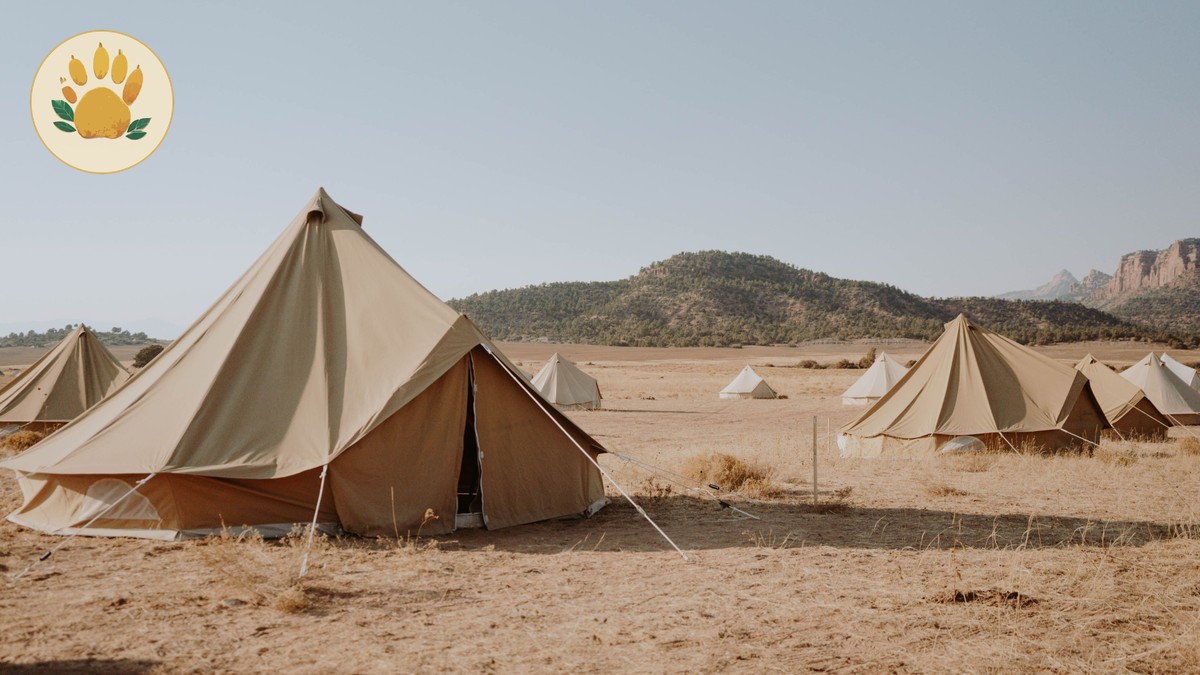
If you are planning a honeymoon safari, you may already know the answer matters. How noisy are safari tents at night? The honest answer is simple. Safari tents are not soundproof. Canvas stops light and prying eyes. It does very little to stop sound. A canvas wall is often thinner than a warm jacket. Voices, rain, wind, and animal calls pass through easily.
This guide is written for Kenya, not for a generic African safari. It separates bush noise from camp noise. It compares riverside Mara camps with inland conservancy camps. It gives you a practical booking checklist for a quieter tent.
How Noisy Are Safari Tents: Sound Through Canvas
Most safari tents use 10 to 16 ounce cotton or polycotton. That fabric blocks vision. It does not block noise. A tent zipper at 2 a.m. can sound louder than the hyena outside. A normal conversation from a neighbor 8 metres away can come through clearly. Low-frequency sounds travel best through canvas. A lion roar or an elephant rumble passes through the walls more easily than a high-pitched bird call.
You should also expect the tent itself to move. Wind taps the canvas. Rain drums on the roof. A sudden gust can make the side panels crack. This is normal. It is not poor workmanship. It is simply the difference between a tent and a hotel room.
A Sample Night in the Masai Mara
Imagine a night in the Masai Mara. At 21:00, the generator cuts out. You hear tree hyraxes starting their long, rising call. At 23:00, a lion calls from the west. The sound is low and soft, but it enters the tent through every canvas wall. At 02:00, a hippo grazes on the lawn. Each bite crunches. At 04:30, the kitchen light clicks on. A cook sets out flasks. The first vehicle idles. That is the real noise curve of a safari night.
The Main Noises You Will Hear at Night
Separate what is wild from what is human-made. Many first-time safari guests are surprised by how much of the noise comes from camp itself.
Wildlife sounds in Kenya often include these:
- Lion roars and contact calls. A lion roar can carry 8 kilometres in open air. In the Masai Mara, a roar from a kilometre away can sound as if it is outside your tent.
- Hyena whoops and giggles. Hyenas often pass near unfenced camps at night. Their calls can sound close even when the animals are 300 metres away.
- Hippo grunts. If you stay near the Mara River or a permanent pool, hippos will be a constant night sound. Water carries sound well.
- Elephant rumbles and branch snaps. In Amboseli, elephants feed around swamp fringes after dark. Their low rumbles can travel through the ground.
- Reed frogs, nightjars, crickets, and cicadas. After rain, this insect chorus can be surprisingly loud.
Human camp sounds include generators, staff preparing for breakfast, vehicles warming up, and neighbors zipping tent flaps. You will learn to tell the difference quickly.
How Tent Location Changes the Noise Curve
In Kenya, the biggest noise decision is not the brand of tent. It is the camp location. A tent beside a river or a floodplain will be louder than an inland conservancy tent. A tent near the generator shed will be louder than a tent at the camp edge.
Use this comparison as a starting point. Costs are indicative because camp rates vary by season and room type.
| Setting | Named location | Typical night noise | Road from Nairobi | Indicative park or conservancy fee |
|---|---|---|---|---|
| Riverside camp, Masai Mara National Reserve | Talek or Mara River bend, Narok County | Hippos, moving water, lion roars, some vehicle noise | about 260 km, 5 to 6 hours | USD 100 to 200 per adult per day plus camp rate |
| Inland camp, Naboisho Conservancy | Naboisho, east of the reserve | Lower human density, distant hyena, limited generators | about 270 km, 6 hours | USD 80 to 150 per person per night as conservancy levy |
| Swamp-edge camp, Amboseli National Park | Ol Tukai or Enkongo Narok swamp area | Elephant rumble, open plain wind, occasional generator | about 240 km, 4 to 5 hours | USD 90 per adult per day KWS fee plus camp rate |
| Acacia camp, Lake Nakuru National Park | Lake Nakuru, floor of the Rift Valley | Wind through acacia, flamingos at dawn, road traffic near water | about 160 km, 3 to 4 hours | USD 90 per adult per day KWS fee plus camp rate |
Camps inside Masai Mara private conservancies usually place tents farther apart. They also limit vehicle numbers. That removes one sleep disruption before it begins. Before you compare locations, check how much a Kenya safari costs. A cheap camp next to a generator shed can cost more in lost sleep than the price difference.
Human Noise: Generators, Neighbors, Vehicles, and Staff
Ask about generator hours before you book. Many larger camps run a generator from first light until 22:00 or 23:00. Small conservancy camps may switch it off earlier. A tent 20 metres from the generator room will hear it clearly. A tent 80 metres away may not. Ask for a tent away from the generator. Also ask about the kitchen, the dining area, the vehicle parking bay, and the staff quarters. Those are the four busiest noise sources after dark.
Neighbor noise is another factor. Budget camps often place tents 10 to 15 metres apart. Canvas carries conversation. At 30 to 50 metres, you get real privacy. Private tents are usually quieter than family or shared camps. For a honeymoon, request a private tent at the camp edge. Ask that it not sit on the main path to the mess tent. That small request removes most human foot traffic.
Rain, Wind, and Canvas
Canvas flaps in strong wind. It can rattle like a sail. A well-pitched fly sheet and firm guy ropes reduce this a lot. Ask if the tent has a separate rain fly and guttering. Rain on canvas is a hard drumroll. Some couples find it deeply calming. Light sleepers may not. Kenya’s long rains run from March to May. Short rains often arrive from October to December. If rain keeps you awake, choose a permanent suite or a tent with a solid roof over the sleeping area.
Ensuite tents remove one common night noise problem. You will not need to unzip the tent and walk to the bathroom. If you are unsure about shared facilities, read whether safari camps have private toilets. A private bathroom also means fewer guided escorts after 10 p.m.
Are Safari Tents Safe When Animals Are Close?
Canvas is not a barrier against a determined elephant or predator. But animals generally do not see a tent as food. Lions and hyenas rarely tear into tents. Most problems happen when people leave food inside or try to walk outside at night. Zip the tent fully. Keep snacks and luggage inside. Do not eat in bed.
If you hear a heavy animal sniffing or brushing against the tent, stay quiet. Stay inside. Use the in-tent radio or phone to call camp staff. Wait for a night escort. Do not lift the flap to look. If the camp has no radio, use a flashlight to signal from inside. Most camps have night guards and a clear escort routine. Confirm this at check-in.
Fenced camps trade some wildness for fewer animal sounds at the doorstep. Unfenced camps allow closer wildlife. You may hear a leopard cough from 100 metres away. That can be thrilling for one person and too much for another. Choose honestly.
A Practical Checklist for Requesting a Quieter Tent
Use this checklist when you enquire or book.
- Ask for a tent away from the generator, kitchen, dining area, staff path, and parking.
- Request at least 30 metres from the next tent.
- Choose an inland conservancy tent over a riverbank or floodplain tent if hippos will keep you awake.
- Ask what time the generator switches off and whether it runs all night.
- Confirm there is a night guard and an in-tent radio or phone.
- Bring foam earplugs and a downloaded white noise file.
- If wind bothers you, ask about a fly sheet and guy ropes before arrival.
- For a honeymoon, ask for a corner tent on the camp edge.
If you hear sustained animal sounds outside, do not wait until morning. Use the radio or phone. Staff can come with a flashlight and escort you if needed. Night escorts are normal practice in Kenya. You are not being difficult.
The SafariPure Difference
We treat noise as part of the booking, not an afterthought. SafariPure asks about generator hours, tent spacing, walking paths, and kitchen location before we recommend a camp. For honeymoon clients, we typically hold quiet corner tents in private conservancies and away from vehicle loops. We cannot promise silence in a living wilderness. We can remove the avoidable noise.
Plan Your Quieter Safari
If you want help choosing a camp that balances privacy, location, and the way you sleep, plan your safari with SafariPure. You can also browse our Masai Mara safari tours. Tell us what keeps you awake at night. We will request the right tent before you arrive.