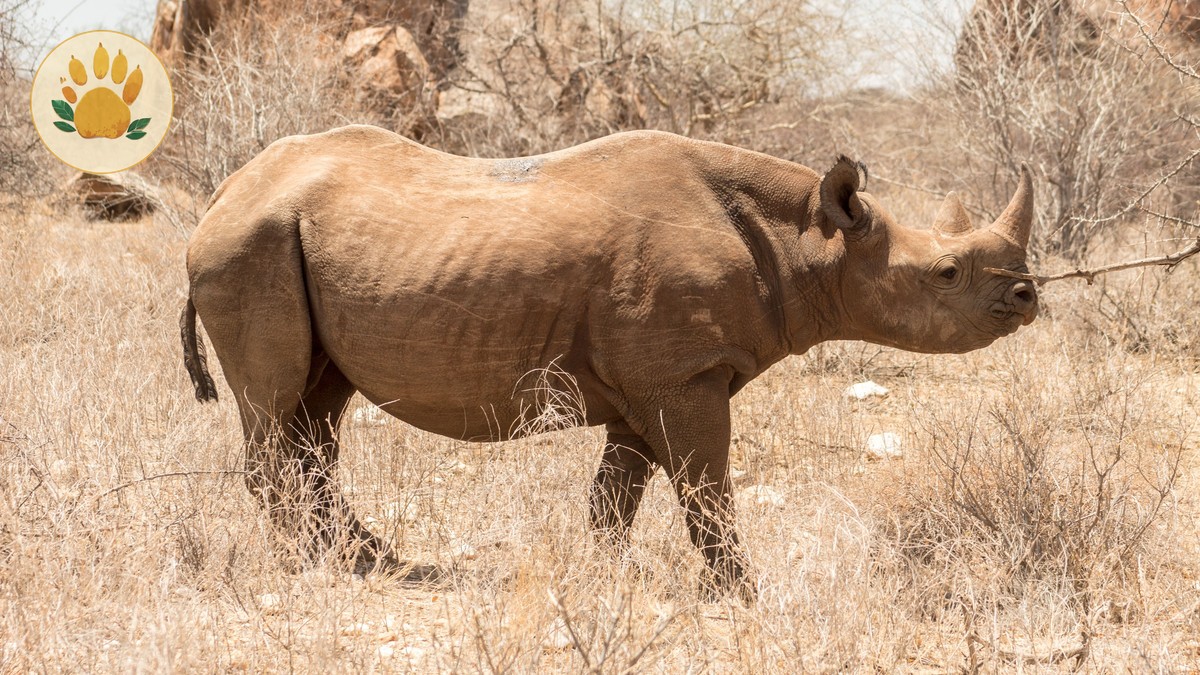
If you have already done a Mara game drive and want to get out of the vehicle, Borana Conservancy is where that happens. It sits in Laikipia, on the slopes below Mount Kenya. It is one of the few places in East Africa where you can walk up on a black rhino with an armed scout and a straight answer about the risk. This guide covers Borana Conservancy rhino lion tracking costs, timing, and how the two activities compare.
Borana covers about 32,000 acres and shares an unfenced boundary with Lewa Wildlife Conservancy to the north. Together they form the Lewa-Borana landscape, roughly 90,000 acres of connected rhino habitat. That boundary matters. Rhinos, elephants, and lions move freely between the two properties, so what you see on a Borana morning depends partly on what Lewa’s animals did the night before.
Where Borana Sits in Laikipia
Borana is about 220 km north of Nairobi, a five to six hour drive on the C76 through Nanyuki, or a 45 minute flight to Borana’s own airstrip. Nanyuki town, with fuel, a hospital, and the last reliable phone signal for many visitors, is about an hour’s drive south. That makes Borana a realistic add-on to a Mara or Amboseli trip rather than a separate expedition.
The conservancy borders Lewa on one side and the Ngare Ndare forest reserve on the other. That is part of why rhino tracking fees here are routed partly to the Ngare Ndare Conservation Trust rather than kept purely in-house.
Rhino Tracking on Foot
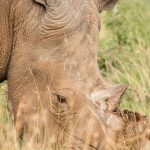
Rhino tracking at Borana is a guided walk, not a drive-and-hope. A ranger and a guide take you out, usually early morning or late afternoon. They follow radio updates from scouts already in the field who have eyes on a rhino from a safe distance.
Once scouts confirm a relaxed animal, your group closes the distance on foot, generally to 30 to 50 meters, kept upwind and behind cover where possible. Guides identify individual rhinos by ear notches, a numbering system rangers use instead of collars. It lets them track over 50 black and white rhinos across the wider Borana-Lewa population.
The activity runs about one to two hours including the walk in and out. Because Borana’s scouts track rhinos daily as part of anti-poaching monitoring, guests get close to a confirmed animal on the large majority of outings. It is about as close to a guaranteed sighting as walking safaris get.
Lion Tracking With Telemetry
Lion tracking works differently and guests should know that going in. Several of Borana’s lions wear radio collars as part of a long-running predator monitoring program. Guides carry a handheld telemetry receiver and antenna. Guests take turns sweeping it across the horizon, listening for the beep that gets louder as you close in on a signal.
This is done from a vehicle, not on foot. Lions are not approached the way rhinos are. That is both for guest safety and because a walking approach on a predator carries far more risk than closing in on a rhino grazing in the open.
Success is not guaranteed. A collared lion might be denned up in thick bush, sleeping through the heat of the day, or simply out of range. Guides are candid about this. Some mornings you get a clear sighting and a good look at the pride. Other mornings you get a strong signal and a shape in the grass. Treat it as a genuine field exercise in telemetry, not a scripted encounter.
Borana Conservancy Rhino Lion Tracking: The Real Difference
| Feature | Rhino Tracking | Lion Tracking |
|---|---|---|
| Method | On foot with armed scout | By vehicle with telemetry receiver |
| Typical duration | 1 to 2 hours | 1 to 3 hours, variable |
| Sighting likelihood | High, most outings succeed | Moderate, depends on collar signal and terrain |
| Distance to animal | 30 to 50 meters | Vehicle distance, no walking approach |
| Cost (adult) | USD 40 | Often included in game drive rate |
| Cost (child under 12) | USD 20 | Often included in game drive rate |
| Fee destination | Ngare Ndare Conservation Trust | Borana conservancy operations |
Rhino tracking is the activity to prioritize if you only have one morning. Lion tracking is worth doing as a bonus on a second or third game drive, when a miss costs you nothing you had counted on.
What the Fees Fund
The USD 40 adult and USD 20 child rhino tracking fee is on top of standard conservancy and lodge rates. It goes toward Ngare Ndare Conservation Trust, which supports forest protection and the scouts who track rhinos daily. This is a case where the extra fee is doing visible work, not disappearing into general overhead.
Conservancy entry fees at Borana are typically bundled into lodge rates, unlike Lewa or Ol Pejeta, where day-trippers sometimes pay a separate gate fee. Confirm this with your camp before travel, since policies shift by season.
Where to Stay
Borana Lodge is the original property, eight cottages with views toward Mount Kenya, full board, and guided activities included. Lengishu House is a private six-bedroom villa on the conservancy, suited to families or groups traveling together who want a whole-house buyout. Both sit inside Borana’s boundary, so tracking activities start from your doorstep rather than requiring a transfer.
Expect Borana Lodge rates from roughly USD 700 to 950 per person per night in high season. Lengishu runs from around USD 4,000 to 6,000 per night for full villa exclusivity. Both fluctuate with season and group size. If you want context on what a walking-based stay actually feels like day to day, it is worth reading about what a walking safari in Laikipia is really like before booking.
Conservation Results
Borana converted from cattle ranching to a wildlife conservancy in the early 2000s and has run without a confirmed poaching incident for over a decade, a record the conservancy attributes to its scout network and the shared border with Lewa. The Lewa-Borana landscape now holds one of the largest concentrated black rhino populations in Kenya, with numbers in the hundreds across both properties.
Anti-poaching rangers patrol daily, and some camps arrange ride-alongs for guests who want to see operations rather than just tracking. This is not a standard bookable activity everywhere, so ask your lodge in advance rather than expecting it on arrival.
Other Activities
Borana is not a one-trick conservancy. Alongside tracking, guests can do conventional game drives, horse riding through open grassland, mountain biking on conservancy trails, and night drives. Horse riding in particular is a Laikipia specialty, since most Kenyan parks and reserves do not allow it.
Borana vs Lewa vs Ol Pejeta vs Solio
| Conservancy | Distance from Nairobi | Rhino tracking on foot | Approx. black rhino numbers | Notable feature |
|---|---|---|---|---|
| Borana Conservancy | 220 km | Yes | Shared with Lewa, several hundred combined | Lion telemetry tracking, unfenced Lewa border |
| Lewa Wildlife Conservancy | 230 km | Limited, mostly vehicle | Shared with Borana | UNESCO World Heritage status |
| Ol Pejeta Conservancy | 200 km | No, vehicle only | Over 140 | Only sanctuary for southern white rhinos in East Africa |
| Solio Game Reserve | 190 km | No, vehicle only | High density in small area | Oldest rhino sanctuary in Kenya |
If walking is the point, Borana is the clear choice. If you want the highest concentration of rhinos in the smallest area with easy vehicle viewing, compare with Solio Rhino Sanctuary instead.
Best Time to Visit
Laikipia is good year-round, but June to October and January to February give the driest tracking conditions and the easiest walking. April and May bring long rains, which thicken bush and make both rhino and lion tracking harder, though camps stay open and rates drop.
Combine Borana with a few nights in Samburu to the north, or the Mount Kenya forest, for a Laikipia-Samburu loop that skips the Mara crowds entirely. It is worth considering if you have already done the classic circuit.
Safety on Foot
Walking near rhino and lion is not casual. Guides carry rifles, keep wind direction in mind at all times, and will call off an approach if an animal shows stress signals. Children over 12 are generally accepted on rhino tracking walks, though check age limits with your specific lodge. For a broader look at how guides manage risk around dangerous game, see our safety guide for close encounters with dangerous animals.
The SafariPure Difference
We do not sell Borana as a guaranteed lion sighting, because it is not one. What we do is set expectations correctly before you land. Rhino tracking is close to a sure thing. Lion telemetry is a genuine field activity with real odds. Both are worth your time for different reasons. We build itineraries that pair Borana with Samburu or Sosian, spreading your days across habitats instead of repeating the same drive. We also work directly with Borana Lodge and Lengishu House to match your budget and party size before you commit to either.
Plan Your Borana Trip
If rhino tracking on foot and a real shot at lion telemetry sound like the Laikipia leg you have been missing, we can build the details around it. Visit our Laikipia safari tours page or get in touch through our contact page to start planning.