If you have already stood on the Mara escarpment watching wildebeest queue at the river, you know the migration is not one event. It is a year-round movement across two countries, and the kenya vs tanzania migration side question comes down to timing, budget, and how much crowding you can tolerate. This guide gives you the real numbers behind that choice.
The quick verdict: Kenya vs Tanzania migration side
Choose Kenya’s Maasai Mara if you have 3 to 5 days, want the shortest flight time from Nairobi, and are chasing the July to October crossing drama. Choose Tanzania’s Serengeti if you have 7 or more days, want to follow the herds through calving season in the south, and would rather avoid vehicle jams at the crossing points.
Most repeat visitors who have already done a classic Mara trip find more value heading into Tanzania next, simply because the Serengeti’s 14,750 square kilometres offer terrain the Mara cannot match in size.
Migration timing by country
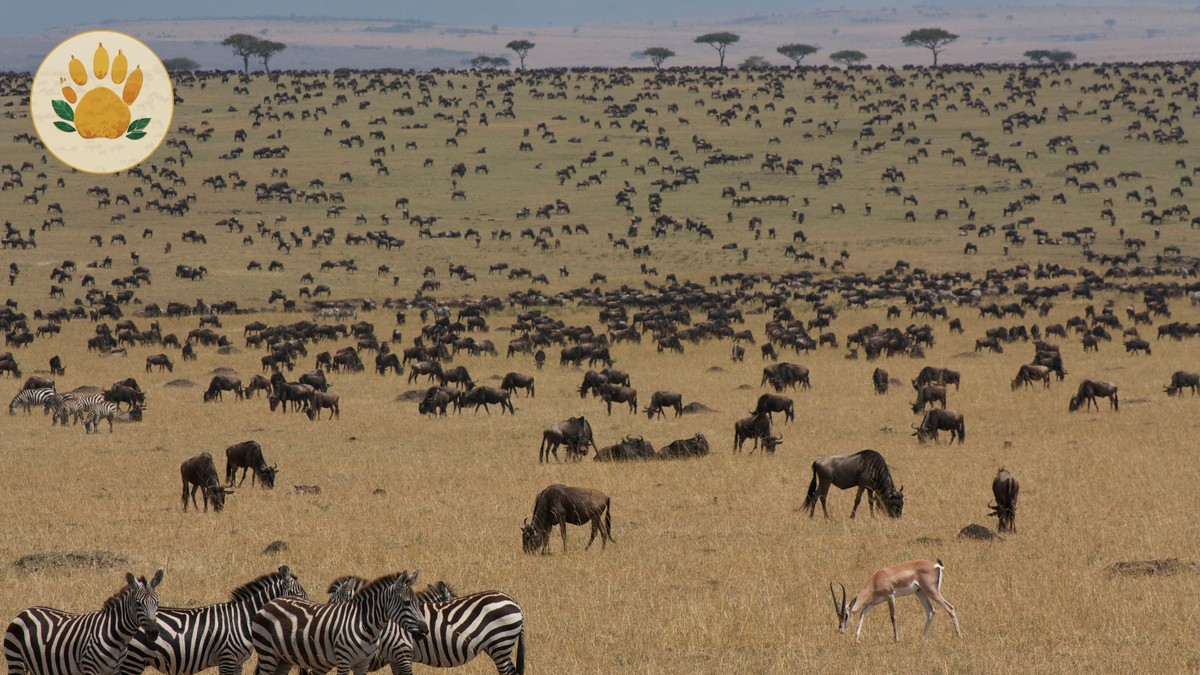
The herds move in a rough clockwise loop. From December to March they calve on the short-grass plains of the southern Serengeti and Ndutu, in Tanzania. By April and May they push north through the central Serengeti and the Western Corridor, crossing the Grumeti River around late May or June. From July they enter Kenya’s Mara ecosystem, crossing the Mara River repeatedly through August, September, and into October. By November they turn south again, back into Tanzania, ahead of the short rains.
That means Tanzania holds the migration for roughly eight months of the year, and Kenya for around four. It also means the calving season, a genuinely spectacular phase with predators working the plains hard, only happens on the Tanzania side.
River crossings: Mara River vs Grumeti River
The Mara River crossings are the ones people picture: steep banks, crocodiles, thousands of wildebeest bunching before they jump. They happen on both sides of the border, since the river cuts through Kenya’s Mara Triangle and Tanzania’s northern Serengeti alike.
The Grumeti River crossings, further south in Tanzania, are smaller and less predictable, but come with far fewer vehicles. Fewer tour operators build itineraries around them, so a Grumeti crossing can feel like something you found rather than something you queued for.
No guide can promise you will see a crossing on a given day, regardless of the side. Herds often mass at a crossing point for hours, or days, before committing. Build in at least three full days near the river if witnessing one is your priority.
Landscape and scale
The Maasai Mara National Reserve covers about 1,510 square kilometres, with a further 1,400 square kilometres of private conservancies bordering it. The Serengeti National Park alone covers roughly 14,750 square kilometres, nearly ten times the reserve.
That scale changes the safari. In the Mara, wildlife concentrates in a smaller space, so sightings come faster and more densely. In the Serengeti, you drive further between sightings, but you rarely share a scene with more than one or two other vehicles once you are away from Seronera.
Costs: fees, camps, and comparisons
Here is how the two sides compare on the numbers that actually shape a budget.
| Factor | Maasai Mara, Kenya | Serengeti, Tanzania |
|---|---|---|
| Nearest gateway city | Nairobi, 270 km / 5 to 6 hr drive, or 45 min flight from Wilson Airport | Arusha, about 325 km to Seronera / 6 to 7 hr drive, or roughly 1 hr 15 min flight |
| Reserve or park fee (non-resident, per person per day) | USD 80 to 100 in the Narok County reserve; USD 100 in the Mara Triangle (indicative, varies by season) | USD 71 to 82, higher in peak season June to March (indicative) |
| Peak crossing window | July to October, Mara River | May to June, Grumeti River; July to August, Mara River (Tanzania side) |
| Typical stay length | 3 to 4 nights | 5 to 7 nights, given the park’s size |
| Budget-friendly camp example | Mara Under Canvas, from around USD 350 per person per night (indicative) | Ndutu Safari Lodge, from around USD 300 per person per night (indicative) |
| Mid-range camp example | Kicheche Bush Camp, Mara North Conservancy | Serengeti Serena Safari Lodge, Seronera |
| High-end camp example | Angama Mara or Sala’s Camp | Singita Sabora Tented Camp or Four Seasons Safari Lodge Serengeti |
Visa costs add to the total. Kenya requires an eTA, currently around USD 34. Tanzania issues its own visa, typically USD 50 for a single entry. Some travelers ask about a single visa covering both Kenya and Tanzania. No such joint pass exists. The East Africa Tourist Visa links Kenya, Uganda, and Rwanda, but Tanzania sits outside it, so budget for two separate visa fees if you plan to cross the border.
Crowds, conservancies, and safari quality
Peak season in the Mara can mean dozens of vehicles at a single crossing point. If you have read anything about how crowded the Mara side gets during peak season, you already know this is the reserve’s main trade-off.
The fix, on the Kenyan side, is booking into private conservancies on the Kenyan side such as Mara North or Olare Motorogi. These cap vehicle numbers and allow off-road driving and night drives, both banned in the main reserve. Expect to pay a conservancy fee on top of your camp rate, typically USD 70 to 100 per person per night.
Tanzania’s equivalent is simply the park’s size. Away from Seronera’s central hub, sightings thin out but so do other vehicles. There is no conservancy system layered over the Serengeti in the same way, though the Grumeti Reserves and Loliondo areas offer a comparable private-land experience.
How many days you need
For the Mara, three nights covers the reserve and one conservancy, four if you want two conservancies. For the Serengeti, plan five nights minimum to cover the northern, central, and western corridors properly, or seven if you are adding the Ndutu plains for calving season.
If you want both sides in one trip, add two travel days for the border crossing and flights, and expect at least 10 days total to do it without rushing.
Ngorongoro and the beach add-on
Most Tanzania migration itineraries route through the Ngorongoro Crater on the way to or from the Serengeti. It is worth the detour. The crater holds one of Africa’s densest concentrations of predators in a compact, walled caldera, and pairs naturally with a Serengeti trip since it sits on the same road.
For a beach extension, Zanzibar is the natural pairing for a Tanzania migration trip, roughly 1 hour 40 minutes by flight from Arusha via Kilimanjaro or Dar es Salaam. From Kenya, Diani Beach is about 1 hour by flight from Nairobi, with Lamu as a quieter, dhow-and-Swahili-architecture alternative further north.
The SafariPure Difference
We do not sell one side over the other. We build the itinerary around what you have already seen and what you actually want next. If you know the Mara and are ready for Samburu, Laikipia, or the Kaya forests on the Kenyan coast, we route you there instead of repeating a trip you have done. If a crossing is genuinely your priority, we plan around the river, not around a generic week in July. Every camp we recommend, we have vetted for vehicle limits, guide quality, and honest crossing odds, not just photographs.
Frequently asked questions
Is Kenya or Tanzania better for the Great Migration? Neither is universally better. Kenya suits shorter trips and the July to October crossing season. Tanzania suits longer trips, covers more months of the migration, and includes calving season.
Can I see the migration in both countries on one trip? Yes, but budget at least 10 days and expect two visa fees and a border transfer, by road via Isebania or by connecting flight through Nairobi and Arusha.
How likely am I to see an actual river crossing? No operator can guarantee it. Herds can wait days before crossing. Three full days near a known crossing point gives reasonable odds in peak months.
Do I need separate visas for Kenya and Tanzania? Yes. There is no combined visa for these two countries specifically, unlike the East Africa Tourist Visa that covers Kenya, Uganda, and Rwanda.
Is a Kenya or Tanzania safari cheaper overall? Park fees run similar, within about USD 10 to 20 of each other per day. Tanzania trips often cost more overall because the Serengeti’s size means more nights and more internal flights.
Plan your migration trip with SafariPure
Whichever side fits your dates and your appetite for crowds, we can build the route around it, including conservancy stays, Ngorongoro, or a coastal finish. Get in touch with SafariPure to start planning your Kenya or Tanzania migration safari.