You have found the safari you want. The itinerary looks right. The camp looks right. Then the operator asks for a deposit, and you pause.
How much should you pay upfront? Is 30% normal? What if you cancel? These questions deserve straight answers before you send money to another country.
This guide covers what a normal Kenya safari booking deposit looks like, what affects the amount, and what to check before you pay.
Kenya Safari Booking Deposit: How Much Is Normal
Most reputable operators ask for between 20% and 30% of the total safari cost as a deposit. This is the industry standard across Kenya.
Luxury camps and peak-season bookings often require more. Budget operators may ask for less. Some ask for the full amount upfront, and you should treat that with caution.
Here is a clear benchmark of what to expect:
| Safari type | Typical deposit | Balance due | Notes |
|---|---|---|---|
| Budget camping safari | 20% | 30 to 45 days before arrival | Smaller operators may accept 15%, but terms vary |
| Mid-range lodge safari | 20% to 30% | 45 to 60 days before arrival | Most common range for standard bookings |
| Luxury lodge or camp | 30% to 50% | 60 to 90 days before arrival | High-end camps have stricter policies |
| Peak migration season (July to December, Masai Mara) | 30% to 50% | 60 to 90 days before arrival | Camps fill fast, so deposits are higher |
| Private conservancy stays (Naboisho, Mara North) | 30% to 50% | 60 days before arrival | Conservancy fees are bundled into lodge rates |
For a mid-range safari costing USD 8,000 per person, a 20% deposit is USD 1,600. A 30% deposit is USD 2,400. The difference matters for your cash flow.
Deposits protect the operator, not just the camps. When you book, the operator commits to specific camps, vehicles, guides, and park entry slots. If you cancel late, they lose money. The deposit covers that risk.
What Affects the Deposit Amount
Several factors push the deposit higher or lower. Knowing them helps you budget and compare quotes fairly.
Peak Season Demand
The Masai Mara National Reserve is busiest from July to December. This is the wildebeest migration window, and the reserve charges different rates by season. Non-resident entry is USD 200 per adult per day from July to December, and USD 100 from January to June.
Camps in and around the Mara fill quickly in peak season. Operators ask for larger deposits because they must commit to camp bookings early. If you cancel, they may not refill your slot.
Booking six to twelve months ahead for July, August, or September is common. The earlier you book, the more choices you have for camps, and the more time you have to pay.
Camp Tier and Location
Luxury camps and private conservancies have stricter terms. Conservancies like Naboisho and Mara North bundle the nightly conservancy fee into the lodge rate, roughly USD 80 to 150 per person per night. These are exclusive areas with limited beds, so operators pay deposits to hold those beds.
Budget camps are more flexible. They are easier to refill, so operators accept smaller deposits.
Your Travel Dates
If you book less than 90 days before travel, many operators ask for a larger deposit or full payment. This is because they must pay camps and ground handlers on short notice. A 40% deposit for a booking made two months out is not unusual.
Number of Travelers
Group bookings sometimes come with different terms. A single couple and a family of six have different risk profiles for the operator. Ask whether the deposit is per person or per booking, and get it in writing.
When the Balance Is Due
The balance is usually due 45 to 60 days before your arrival date. Luxury camps often require 60 to 90 days.
This timeline matters for two reasons. First, it gives you time to spread payments. Second, it means your final payment is due before you travel, so you will not be paying for a safari from a hotel lobby in Nairobi.
Here is a typical payment schedule for a mid-range safari booked ten months ahead:
- Deposit of 20% at booking, to hold your camps and guide.
- Second payment of 40% about four months before travel.
- Final balance of 40% about 45 days before arrival.
Not every operator offers a middle payment. Some ask for the deposit and then the full balance. Ask for a payment schedule in writing so you know exactly when each amount is due.

Accepted Payment Methods and Fees
Most Kenya safari operators accept bank transfers, credit cards, and sometimes PayPal or Wise. Each method has trade-offs.
Bank transfers are common but come with wire fees on both ends. Your bank may charge USD 30 to 50 for an international wire, and the receiving bank may deduct another USD 10 to 20. Confirm the operator quotes prices in USD and that the deposit amount you pay is what they receive.
Credit cards are convenient, but operators often pass on the processing fee. This is usually 3% to 5%. Ask whether the deposit quote includes card fees or whether they are added on top.
Some operators give a small discount, often 2% to 3%, for bank transfers because they avoid card fees. This can save you USD 60 on a USD 3,000 deposit.
Never send payment to a personal bank account. A legitimate operator uses a company account. If they ask you to pay a “consultant” or “agent” directly, treat it as a red flag.
Refunds, Cancellations, and Non-Refundable Deposits
The honest answer is that most safari deposits are non-refundable. You are paying to hold a place at a camp, and the camp has a cancellation policy that the operator passes on to you.
However, the details vary widely. Some operators offer partial refunds if you cancel more than 60 days out. Others offer to move your deposit to new dates. A few offer full refunds minus an administrative fee, usually USD 100 to 200.
Ask these questions before you pay:
- If I cancel 90 days before travel, what do I lose?
- Can I move the deposit to different dates if I need to?
- Is the deposit transferable to another traveler?
- Are there any circumstances where the deposit is fully refundable?
Write the answers into the booking contract or a signed email. Verbal promises do not help if you need to cancel.
Installment Payment Plans
Most operators allow you to split the balance into two or three payments. This is not a loan. It is simply a schedule that lets you pay over several months.
Ask whether installments are available at no extra cost. Some operators charge a small admin fee for splitting payments, usually USD 50 or less.
Installments help you manage cash flow, especially if you are also paying for flights, visas, and Kenya malaria zones for safari travelers medication before you go.
One caution: a plan with five or more installments may actually be a sign that the operator is not confident about their own cash flow. A healthy operator typically asks for one or two payments, not monthly dribbles.
How Deposits Secure Camps and Vehicles
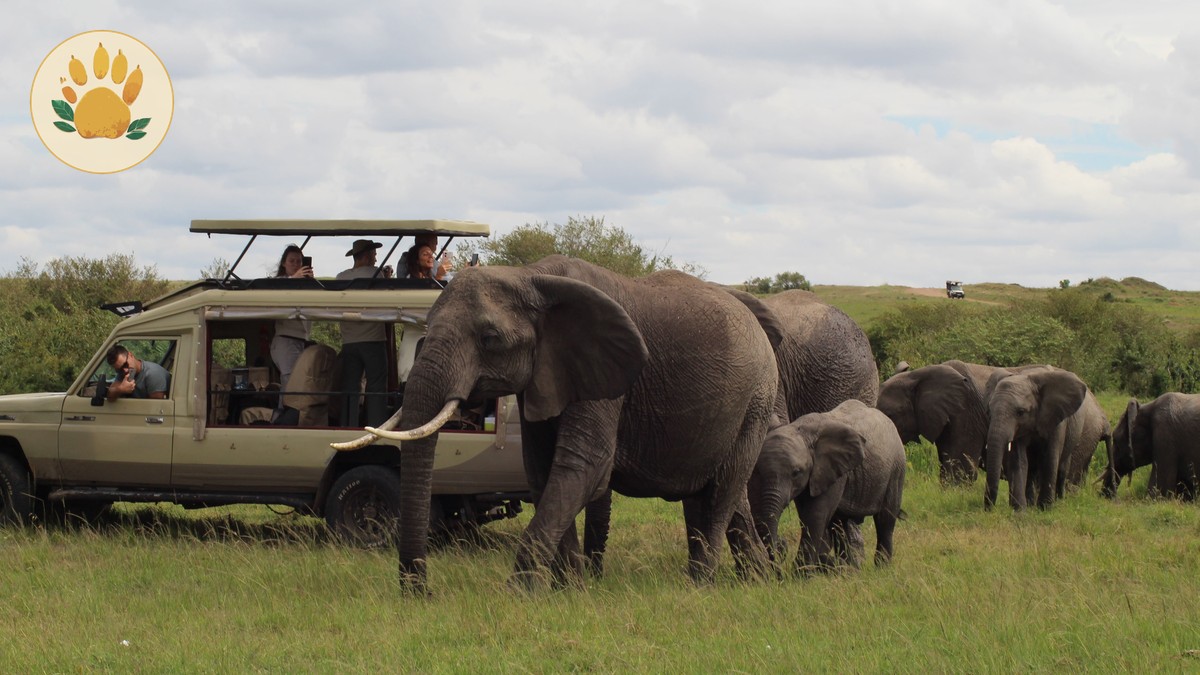
Your deposit does more than hold a tent. It secures a vehicle with a pop-up roof, a guide who knows the reserve, and a kitchen slot at the camp.
In the Masai Mara, good guides book out months ahead. In peak season, the same guide may be offered work by three operators. Your deposit is what makes the operator commit to that guide for your dates.
Vehicle availability is similar. Safari vehicles are limited, and operators who do not hold vehicles early end up paying daily rental rates that can exceed USD 300 per day. Your deposit lets them lock in a fair rate and pass the savings to you.
Park entry fees are separate and paid at the gate. For Amboseli National Park, that is USD 90 per adult per day. Lake Nakuru is also USD 90. Tsavo East and West are USD 80 each. Nairobi National Park is USD 80. These are paid in cash or by card when you enter the park, not as part of your deposit.
Peak-Season and Luxury Safari Differences
Peak season and luxury bookings carry higher deposits for good reason. Let us look at both.
Peak Season
The migration months of July through September are the most expensive time to visit the Masai Mara. Narok County sets the reserve fee at USD 200 per adult per day for this period. A three-night stay for two people means USD 1,200 just in park fees.
Camps know this is their high season, and they ask operators for higher upfront commitments. Operators pass that to you. A 40% deposit for a peak-season booking is normal, especially if you book less than eight months ahead.
Luxury Camps
Luxury camps in private conservancies often have nightly rates of USD 1,000 to 2,000 per person. These camps have a small number of tents, sometimes as few as six. One cancellation is a big loss for them.
Their deposit requirements reflect that risk. A 50% deposit is not unusual for a top-tier camp in the Mara North Conservancy. The trade-off is that you get a private vehicle, a dedicated guide, and access to areas with far fewer vehicles than the main reserve.
The Lower-Deposit Trade-Off
A low deposit is attractive, but it comes with trade-offs. Operators who ask for only 10% may have tighter cancellation terms, more frequent payment deadlines, or less flexibility on camp choices.
Ask why the deposit is low. If the answer is that the operator holds no camps until you fully pay, then your dates are not actually confirmed. That is risk, not value.
A normal deposit of 20% to 30% with a clear contract is healthier than a 10% deposit with vague promises.
What Your Deposit Should Include in Writing
Before you pay, ask for a written confirmation that specifies:
- The exact deposit amount in USD.
- The total safari cost and what it includes.
- Your specific camp names and dates.
- The vehicle type and whether it is private.
- The guide’s name or experience level.
- The payment schedule for the balance.
- The cancellation policy in clear language.
- What happens if the camp overbooks.
A professional operator can provide this within a day. If they hesitate or give vague answers, do not pay.
Also confirm what your how much a safari costs in Kenya quote actually covers. Ask whether drinks, laundry, park fees, and tips are included. A deposit that seems low may exclude costs you will pay later. And a quote that includes everything is easier to budget for, even if the deposit is higher.
The SafariPure Difference
SafariPure plans trips the way a good guide drives a track: slowly, carefully, and without surprises. We tell you exactly what your deposit covers, what it does not, and what happens if your plans change.
We also help you decide how many days in the Masai Mara you actually need, so you are not paying for more nights than your budget allows. A well-planned four-night stay beats a rushed six-night itinerary that leaves you exhausted.
Every SafariPure itinerary includes a written booking contract with the deposit percentage, the balance due date, and the cancellation terms stated plainly. No hidden fees, no vague commitments, no last-minute surprises.
Our guides live in the regions they drive. They know the wildebeest crossing points by mid-morning light and the leopard dens that the regular vehicles drive past. That field knowledge is part of what your deposit secures.
If you are ready to plan a Kenya safari, we would like to help. We will walk you through the deposit terms, the park fees, and the camp choices with clear numbers and honest advice.
Plan your Kenya safari with SafariPure and get a detailed itinerary with transparent pricing and booking terms. Contact us to start the conversation about your trip.