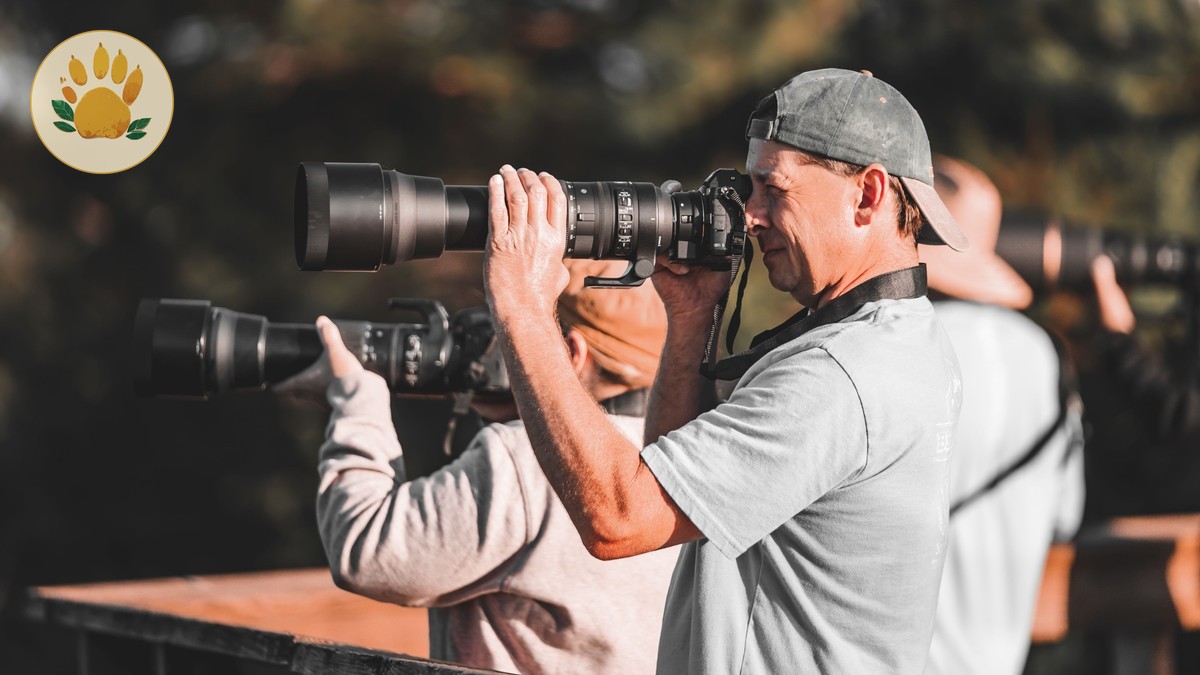
Every photographer packing for Kenya asks the same question: what’s the best lens focal length for safari photography in Kenya? Do I need a 600mm lens, or will 300mm do? The honest answer depends on which parks you’re visiting, what vehicle you’ll be riding in, and how much weight you’re willing to carry through Jomo Kenyatta International Airport. This guide skips the generic “bring a telephoto” advice you’ll find on most gear blogs and gets specific about Kenya conditions instead.
Finding the Best Lens Focal Length for Safari Photography in Kenya
Most wildlife in Kenya’s parks keeps a working distance from vehicles, usually somewhere between 20 and 80 meters. A kit lens topping out at 55mm or 105mm will leave you with a lion the size of a pebble in the frame. A focal length of at least 200mm is the practical floor for anything beyond a landscape shot.
That said, 200mm is a floor, not a target. On the open plains of the Masai Mara, animals are often far enough away that 300mm to 400mm becomes your everyday range. In Amboseli, elephants frequently close that gap on their own, sometimes to within 15 meters. A lens that can also pull back matters as much as one that can reach out.
Budget, Mid-Range, and Pro Lens Tiers
There is no single right lens, but there are sensible tiers depending on budget and how often you shoot wildlife outside this trip.
| Tier | Example lens | Approx. price (USD) | Best for |
|---|---|---|---|
| Budget | 70-300mm f/4.5-5.6 | $150-$600 | Occasional shooters, open plains like the Mara or Amboseli |
| Mid-range | 100-400mm f/4.5-5.6 | $1,000-$2,500 | Most travelers, works across all Kenya parks |
| Mid-range zoom | 150-600mm f/5-6.3 | $900-$2,000 | Extra reach for distant cats and birds, heavier to hand-hold |
| Professional | 70-200mm f/2.8 + 500-600mm f/4 | $4,000-$13,000 | Serious photographers, low light at dawn and dusk, magazine-quality detail |
Prices shift with brand and used-market availability, but this range holds across Canon, Nikon, and Sony systems as of mid-2026.
The Case for One All-Day Lens
Changing lenses in a moving or dust-blown Land Cruiser is a good way to get sensor dust and miss the shot entirely. Most experienced safari photographers settle on one lens that stays mounted for the whole game drive, usually something in the 100-400mm or 150-600mm range. It will not be optimal for every single moment, but it removes the risk of fumbling a lens swap while a leopard walks out of cover.
If you’re traveling with two camera bodies, put a wide zoom on one and your telephoto on the other. That solves the changing-lens problem without any compromise, though it does mean carrying two bodies through the bush all day.
Don’t Forget Wide-Angle
Focal length obsession can make photographers forget the rest of the trip. Camp scenes at dawn, the vehicle silhouette against an Amboseli sunset with Kilimanjaro behind it, and a wide shot of a herd stretching across the Mara plain all need something wider. A basic wide zoom in the 16-35mm range weighs little and costs far less than your telephoto, so there’s no good reason to leave it behind.
Crop Sensor vs Full Frame: Does It Change the Math?
A crop-sensor body (APS-C on Canon and Nikon, roughly 1.5x to 1.6x) multiplies your effective reach. A 300mm lens on a crop body behaves like roughly 450-480mm on a full-frame equivalent. That makes crop bodies genuinely useful for safari, since they let you carry a lighter, cheaper lens and still get frame-filling shots.
The tradeoff shows up in low light. Full-frame sensors generally handle the dim conditions of early morning game drives and Aberdare’s forest canopy better, with less visible noise at high ISO. Neither system is wrong for Kenya. Choose based on what you already own before buying new.
Matching Lens to Park: Mara, Amboseli, and Aberdare
This is where most gear guides stop short, and where the real planning happens.
| Park | Non-resident fee (2026) | Typical animal distance | Terrain | Suggested focal length |
|---|---|---|---|---|
| Masai Mara National Reserve | $100/day Jan-Jun, $200/day Jul-Dec | 30-80m on open plains, tighter at river crossings | Open savanna | 200-500mm |
| Amboseli National Park | $90/day | Often 15-40m, elephants approach closely | Open plains and swamp | 100-400mm |
| Aberdare National Park | Indicative $70-90/day, confirm at gate | 10-25m through forest cover | Dense montane forest | 70-200mm |
| Tsavo East National Park | $80/day | 40-100m across wide bush | Semi-arid open bush | 300-500mm |
The Mara’s open grassland rewards long glass, especially in July through October when the wildebeest migration brings dense herds and predators onto the plains. Amboseli’s flat, treeless terrain and habituated elephant herds mean you often need less reach than you’d expect, sometimes as little as 100mm. Aberdare’s forest closes the sightlines down to a few meters in places, so a heavy 500mm lens becomes a liability rather than an asset there. If your itinerary includes shooting the Mara River crossings, plan for the longer end of your zoom range. Crossing points like Lookout Hill and Purungat put you on the opposite bank from the action, often 40 meters or more away.
Shooting From the Vehicle: Bean Bags, Monopods, and Window Space
Lens choice only works if you can steady it. A bean bag draped over the window frame or roof hatch beats a tripod in nearly every Kenya safari vehicle, since there’s rarely floor space to plant tripod legs. Monopods work reasonably well through a pop-up roof but are awkward through a side window.
Window space itself depends on your vehicle. A private safari vehicle vs a shared group vehicle makes a real difference here. In a private vehicle, you can claim a window and keep your bean bag and second body set up all day. In a shared vehicle with six or seven guests, you’ll be rotating between window seats and the roof hatch. That argues for one flexible all-day lens over a bag full of primes you won’t have room to swap.
Lenses for Birds and Action
Bird photography and fast action, like a cheetah chasing a Thomson’s gazelle, both reward 500-600mm reach. This is a niche need. If bird photography and split-second predator action are the main reason for your trip, budget for a 500mm f/4 or a 600mm f/6.3 style lens. Accept the extra weight, usually 1.4 to 3.2kg depending on the model. For most general wildlife travelers, that reach is nice to have but not worth the cost or the extra bag space.
Accessories That Matter More Than People Think
Dust is the real enemy in the Mara and Tsavo, not rain. Bring a rocket blower and microfiber cloths, and clean your lens front element every evening back at camp. Carry at least two spare batteries per body, since cold mornings drain charge faster and camp power is often solar and limited. A 128GB card or larger, plus one backup card, covers a week of RAW shooting without needing to delete anything mid-trip.
Buy or Rent Before You Fly
Nairobi has a small but real camera rental market, mostly clustered around Westlands and Karen, where you can rent Canon and Sony super-telephotos by the week. Renting makes sense if you don’t already own long glass and don’t expect to use it again soon. Buying makes sense if wildlife photography is a habit, not a one-trip purchase. Either way, test the rented gear the day you collect it, not the morning of your first game drive.
One more detail worth checking before you pack: some parks charge extra for professional camera and video equipment at the gate. Review camera permit fees at Kenya’s national parks before your trip so there are no surprises when your gear gets logged at the entrance.
The SafariPure Difference
We plan camera-friendly itineraries, not just wildlife itineraries. That means matching your vehicle configuration to your gear: private where reach and window space matter, shared where budget comes first. We also build in patient, unhurried time at river crossings and waterholes, since a good telephoto shot needs it. And we brief every guest on park-specific permit rules before departure, so nobody negotiates with a gate officer over a tripod on the morning of a game drive.
Ready to Plan Your Kenya Photography Safari?
If you’re weighing lens choices against an actual Kenya itinerary, we can help fit the two together. Get in touch through our contact page or browse our Masai Mara safari tours to start planning.