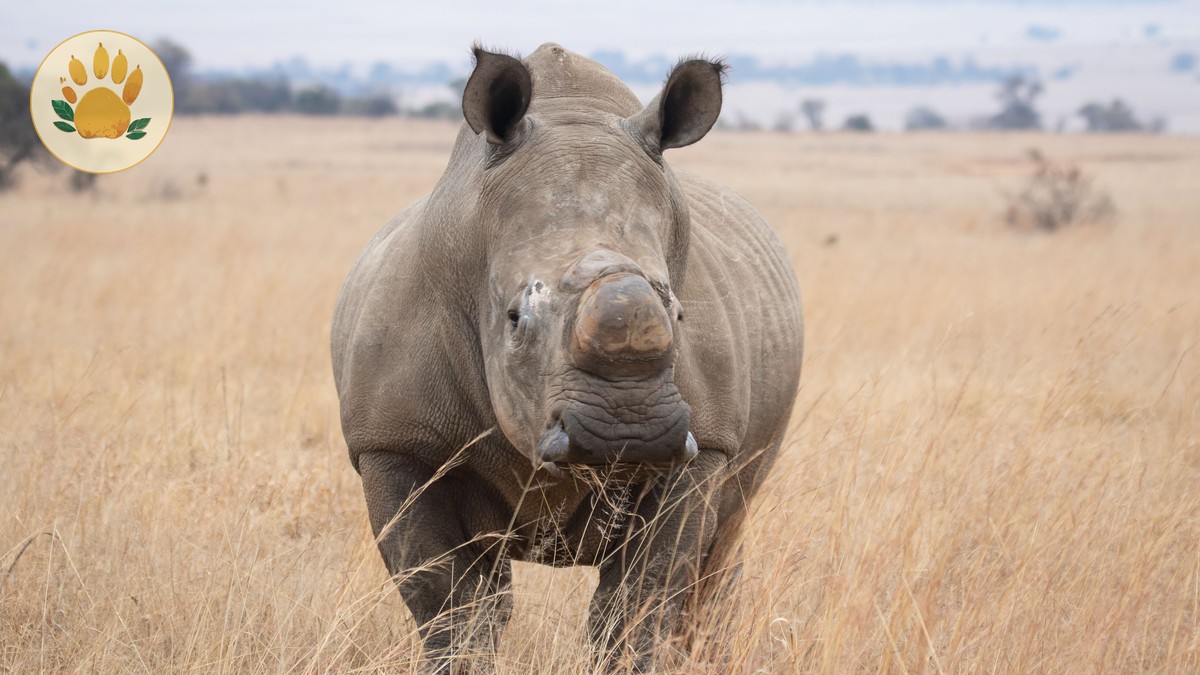
Most first-time visitors expect the difference to be color. It isn’t. In the black rhino vs white rhino comparison, both animals are the same shade of grey, dusted lighter or darker depending on which mud wallow they used last. The real differences are in the mouth, the build, and where you’ll actually find them in Kenya. Here’s what matters on the ground, not just in a textbook.
Why they’re called “black” and “white” despite both being grey
The name comes from a translation mix-up, not skin tone. Dutch and Afrikaans settlers described the white rhino using the word “wyd,” meaning wide, a reference to its broad, square mouth. English speakers heard “white” instead. Once one rhino was called white, the other became black simply by contrast. Neither name describes color at all.
This is worth knowing before you head out, because guests often ask their guide to point out “the grey one and the lighter one.” Both are grey. The mouth is the tell.
Lip shape: the fastest way to identify a rhino
This is the single most reliable field mark, and it works from a vehicle at a reasonable distance.
- Black rhino: a pointed, hooked upper lip, built for grabbing leaves and twigs off bushes.
- White rhino: a wide, square lip, built for cropping grass close to the ground like a lawnmower.
If the rhino’s head is down and its mouth is flat against short grass, you’re almost certainly looking at a white rhino. If it’s browsing at shoulder height off a shrub, it’s a black rhino.
Size and build
White rhinos are the second-largest land mammal after the elephant. Bulls can reach 2,300 kg and stand around 1.8 meters at the shoulder. Black rhinos are noticeably smaller and more compact, with bulls topping out near 1,400 kg and standing about 1.5 to 1.6 meters at the shoulder.
Body shape reinforces this. White rhinos carry a long, sloped back and a pronounced hump over the shoulders where neck muscles support their heavy, grass-grazing head. Black rhinos have a shorter, more rounded back and hold their head higher, since they browse rather than graze.
Head posture, neck, and ears
A white rhino’s head hangs low most of the time, close to the ground it feeds from. A black rhino’s head sits up and alert, scanning bush at chest height. White rhinos also have proportionally larger, more tubular ears that swivel independently, useful for a grazer that spends long stretches with its head down and needs to track sound without looking up.
Diet and feeding behavior
White rhinos are grazers. They eat short grass almost exclusively and need open savannah to do it. Black rhinos are browsers, feeding on leaves, twigs, shoots, and thorny bushes, including acacia that most other herbivores avoid. This single difference explains almost everything else about where each species lives and how you’ll encounter it.
Temperament and social behavior
White rhinos are comparatively relaxed and often seen in small groups called crashes, sometimes five or more animals grazing together. Black rhinos are solitary and considerably more highstrung. They have poor eyesight, rely on hearing and smell, and are more likely to charge if startled at close range. Guides in Kenya treat black rhino sightings with more caution for exactly this reason, keeping vehicles further back and engines running.
Habitat: dense bush versus open plains
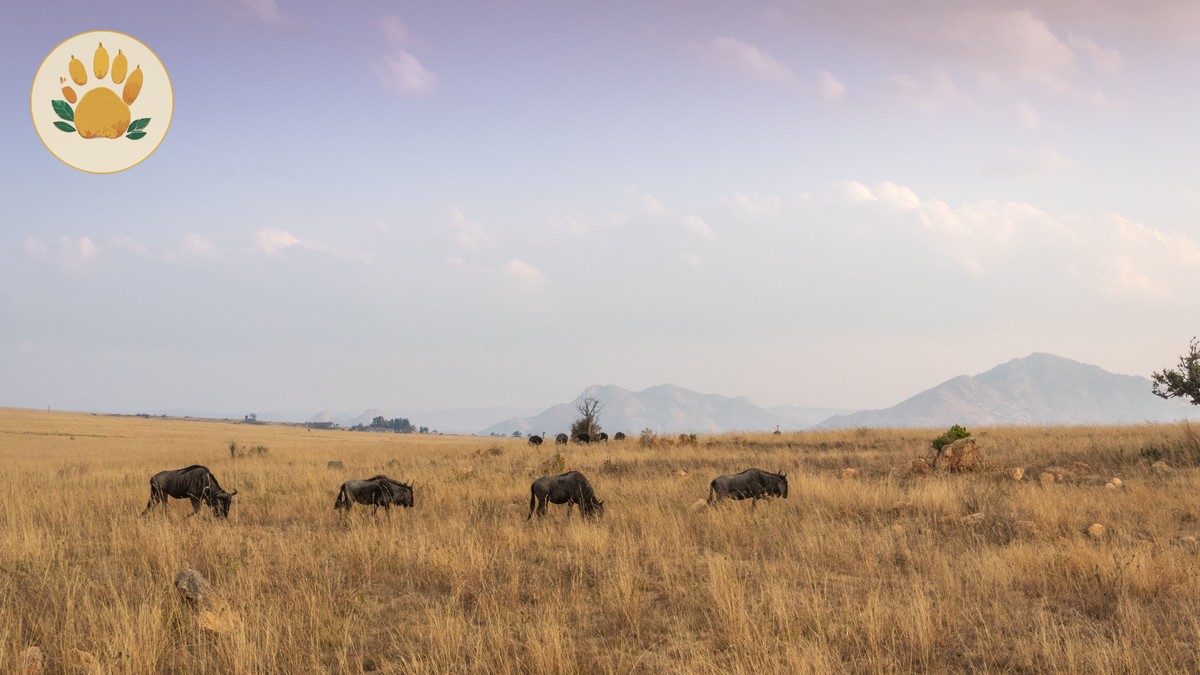
Black rhinos need thick, scrubby vegetation to browse, which also means they are harder to spot. A black rhino can stand 30 meters away in acacia scrub and disappear completely. White rhinos need open grassland, which makes them far easier to see and photograph. This habitat split is the main reason your odds of seeing one species differ so much from the other on any given game drive.
Conservation status and numbers
Both species were pushed to the edge by poaching in the 20th century, but their recovery stories differ sharply.
The black rhino is Critically Endangered, with roughly 6,200 individuals left across Africa as of recent IUCN estimates, an indicative figure that shifts slightly each year. The white rhino splits into two subspecies. The southern white rhino has recovered to around 16,000 animals and is classified Near Threatened. The northern white rhino is functionally extinct in the wild. Only two individuals remain, both female, both living under armed guard at Ol Pejeta Conservancy, home to both black rhino and the last northern white rhinos.
Kenya holds a meaningful share of both populations relative to its size, largely because of fenced, intensively guarded sanctuaries rather than open, unprotected range.
Black rhino vs white rhino: where to see each in Kenya
This is where most articles stop short. Knowing the lip shape doesn’t help if you don’t know which park to book.
| Location | Species present | Distance from Nairobi | Drive time | Park/conservancy fee (non-resident, indicative) | Sighting odds |
|---|---|---|---|---|---|
| Lake Nakuru National Park | Black and white rhino | About 160 km | 2.5 to 3 hours by road | Around USD 60 per adult per day | Very high for white rhino, good for black rhino |
| Ol Pejeta Conservancy | Black rhino, plus the last 2 northern white rhinos | About 200 km via Nanyuki | 3.5 to 4 hours by road | Around USD 90 per adult per day | Very high for white rhino, high for black rhino |
| Masai Mara National Reserve | Black rhino only, in very low numbers | About 270 km by road, or a 45-minute flight from Wilson Airport | 5 to 6 hours by road | Around USD 100 per adult per day (peak season) | Low, a genuine rare and lucky sighting |
Fees change year to year and vary by season, so always confirm current KWS park entry fees before you travel.
Lake Nakuru is the most reliable single stop for both species in one visit. The park is fully fenced, rhino density is high, and open grassland around the lake shore means white rhino sightings are close to guaranteed on a half-day drive. Black rhino sightings there are common but not certain.
Ol Pejeta is the better choice if seeing a northern white rhino, even from a respectful distance, matters to you. It also holds the largest black rhino population of any single sanctuary in East Africa, at well over 100 individuals, in a mix of open and thicker terrain.
The Masai Mara is different. Black rhino numbers there are estimated in the low dozens, spread across a vast, only partly open landscape. Guides who know specific territories can occasionally find one, but no honest operator will promise a sighting. If you’re building a 3-day Masai Mara safari around the Big Five, treat a Mara rhino as a bonus, not a target, and plan a Nakuru or Ol Pejeta stop if seeing rhino reliably matters to your trip.
Field identification summary
| Feature | Black rhino | White rhino |
|---|---|---|
| Lip shape | Pointed, hooked | Wide, square |
| Weight (bull) | Up to 1,400 kg | Up to 2,300 kg |
| Shoulder height | 1.5 to 1.6 m | 1.7 to 1.8 m |
| Diet | Browser (leaves, twigs) | Grazer (short grass) |
| Head posture | Held up, alert | Held low, grazing |
| Social behavior | Solitary | Small groups |
| Habitat | Dense bush | Open savannah |
| Conservation status | Critically Endangered | Near Threatened (southern); functionally extinct (northern) |
| Best Kenya location | Ol Pejeta Conservancy | Lake Nakuru National Park |
The SafariPure Difference
Most guides can recite lip shapes and weight ranges. Fewer will tell you honestly that a Masai Mara rhino sighting is a long shot, or that Lake Nakuru will get you closer to both species in a single morning than a week elsewhere. We plan rhino viewing around actual odds, not marketing copy, and we build in the extra hour at Ol Pejeta or Nakuru that turns a maybe into a near-certainty. That means fewer stops chasing rare sightings and more time watching the animals you came to see, properly, without rushing the vehicle onward.
Plan your rhino safari
If seeing both black and white rhino matters to your Kenya itinerary, it’s worth building the route around Lake Nakuru and Ol Pejeta rather than hoping for a lucky Mara encounter. Get in touch through our contact page and we’ll help you plan a route that actually delivers.