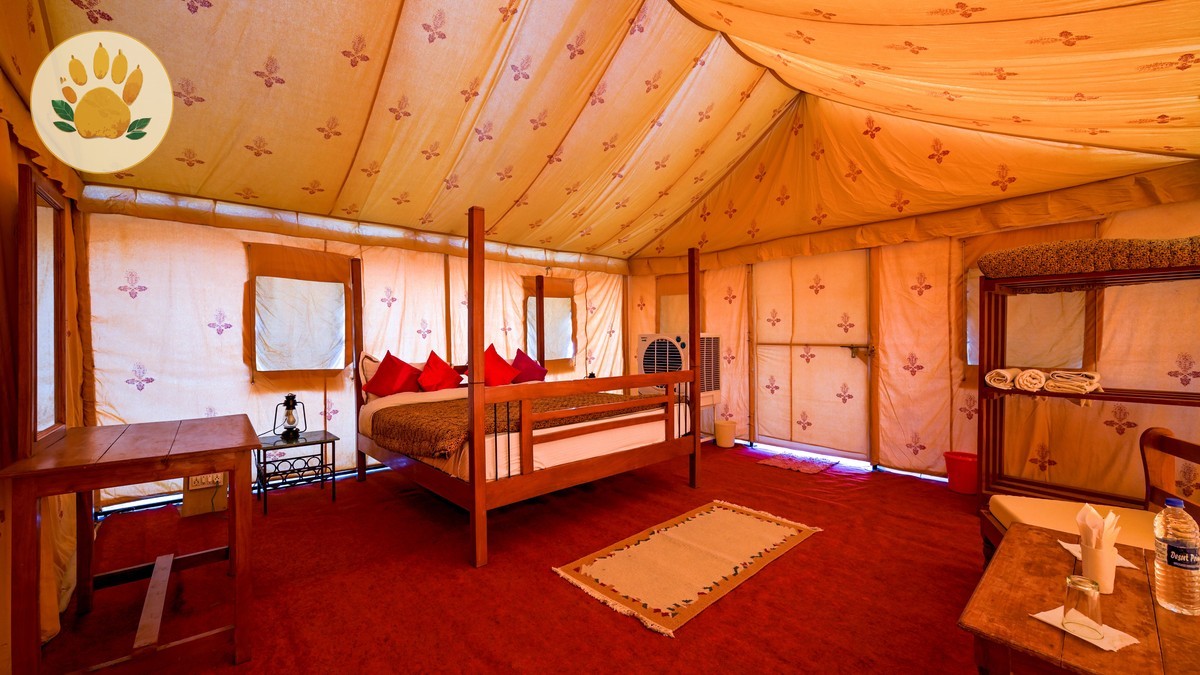
Star bed safari camps Kenya has to offer are rare, and this guide breaks down what you actually get for the price. A star bed is a real bed, on a real deck, with no roof between you and the sky. In Kenya’s dry conservancies, where light pollution is close to zero, that means a Milky Way you can read a book by and a wildlife soundtrack you cannot buy anywhere else. For a honeymoon, it is one of the few splurges that photographs poorly and matters more than almost anything else on the trip.
This guide covers the camps that do it properly, what they cost in 2026, and what nobody tells you about mosquitoes, cold nights, and rain.
What Star Bed Safari Camps Kenya Actually Offer
Most star bed setups fall into two types. The first is a fixed open-air platform, usually a rooftop or raised deck attached to a private suite, with a proper mattress, linens, and mosquito netting that drops down at dusk. The second is a wheeled bed that staff push out from an enclosed room onto an open platform after dinner, then wheel back in if weather turns.
Either way, you are sleeping outside a solid structure, usually within sight or sound of a waterhole, with a guide or Maasai watchman stationed nearby through the night. It is not camping. There is a proper mattress, a duvet, and often a thermos of tea waiting at first light.
The Best Star Bed Camps in Kenya
Loisaba Star Beds, on Loisaba Conservancy in Laikipia, popularized the wheeled-bed version and remains the most photographed. Three raised cedar platforms sit near a waterhole where elephants and buffalo drink most nights.
ol Donyo Lodge, run by Great Plains Conservation on Mbirikani Group Ranch in the Chyulu Hills, builds rooftop star beds into several of its suites, so you sleep above your own room rather than in a separate structure. Mount Kilimanjaro is visible on clear mornings.
Sasaab, above the Ewaso Nyiro River in Samburu, offers a sleep-out deck on request rather than a fixed installation, with river sound replacing waterhole traffic.
Saruni Samburu, in Kalama Conservancy, and its sister camp Saruni Leopard Hill in the Mathews Range, both run occasional fly-camp style sleep-outs supervised by Samburu guides.
Ol Malo, also in Laikipia, has The Nest, a treehouse sleep-out for two built into a fig tree, one of the original private star bed experiences in the country and still among the most romantic.
Where These Camps Sit on the Map
Three regions cover almost every star bed option in Kenya: Laikipia, Samburu, and the Chyulu Hills near Amboseli. Laikipia conservancies like Loisaba sit on high plateau country north of Mount Kenya, with cooler nights and good year-round game. Samburu is lower, hotter, and drier, with its own specialist wildlife like Grevy’s zebra and reticulated giraffe. The Chyulu Hills sit between Tsavo and Amboseli, giving ol Donyo guests the best month for Kilimanjaro views near Amboseli as a bonus.
Worth noting for planners comparing regions: Masai Mara conservancies such as Naboisho do not currently run true fixed star beds. If the Mara is non-negotiable for your itinerary, treat it as a separate leg rather than expecting a sleep-out there.
Safety: Sleeping Where Lions Walk
This is the question every first-timer asks, and it deserves a straight answer. Star bed platforms are positioned with sightlines and wind direction in mind, and a guide or watchman sits within calling distance through the night at every camp listed here. Predators can and do pass close by. Staff do not intervene unless an animal approaches the platform itself, which is rare.
You will be briefed not to leave the platform once settled for the night. Camps provide a covered chamber pot or nearby en-suite bathroom for exactly this reason. Follow the briefing and the risk is genuinely low. Camps with decades of sleep-out history, like Loisaba and Ol Malo, have not had a serious incident.
What You Might See After Dark
Waterhole-facing platforms at Loisaba and similar camps regularly draw elephant, buffalo, and sometimes leopard within the first two or three nights of any given week. Hyena calls carry for kilometers and are the most common night sound across all five camps. Genets and bushbabies move through camp trees. Lion is possible but not guaranteed on any single night, so treat it as a bonus rather than an expectation.
Why Star Beds Suit a Honeymoon
A star bed gives a couple something a standard tented suite cannot: total privacy with no shared walls, no other guests in earshot, and a night sky that needs no filter or caption. Most camps pair the sleep-out with a private sundowner spot earlier in the evening and a slow, unhurried breakfast delivered to the main suite the next morning. It is one night, not the whole trip, which keeps the splurge contained to a single line item in the budget.
2026 Price and Logistics Guide
Rates below are per person per night, full board, based on indicative 2026 published ranges. Confirm exact figures with the camp before booking, as star bed nights sometimes carry a small supplement over the standard suite rate.
| Camp | Region | Getting there from Nairobi | Indicative rate (USD, pp/night, full board) |
|---|---|---|---|
| Loisaba Star Beds | Laikipia | 4-5 hr drive or 45 min flight to Loisaba airstrip | $700-950 |
| ol Donyo Lodge | Chyulu Hills | 5-6 hr drive or 55 min flight to ol Donyo airstrip | $1,200-1,600 |
| Sasaab | Samburu | 6 hr drive or 1 hr flight to Samburu airstrip | $700-950 |
| Saruni Samburu / Leopard Hill | Mathews Range, Samburu | 6-7 hr drive or 1 hr flight to Kalama airstrip | $550-750 |
| Ol Malo (The Nest) | Laikipia | 4-5 hr drive or 1 hr flight to Ol Malo airstrip | $650-850 |
Flights above are on scheduled light-aircraft services from Wilson Airport. Most itineraries combine two or three camps, so a single Laikipia-Samburu loop is common and keeps flight costs to roughly $200-350 per person per leg.
Amenities: What’s There and What Isn’t
Expect a proper mattress, cotton or linen bedding, a duvet for cold nights, and mosquito netting that drops fully around the bed frame. Most platforms have a fire pit or brazier nearby, lit before you arrive and left to burn low through the night. Bathrooms are usually open-air, a short walk or a few steps from the platform, with hot water delivered by bucket shower or solar system.
What is missing matters just as much. There is no air conditioning and no fan, no lockable door, and no electrical outlet at the bed itself. Wind and insects are part of the deal. Bring earplugs if hyena calls are not your idea of a lullaby, and a headlamp with a red-light setting so you do not blind yourself checking the time.
Best Time of Year to Book
The long dry season, June through October, and the shorter dry spell in January and February, give the clearest skies and the best odds of a rain-free night. Around the new moon, stargazing is far better than during a full moon, so check the lunar calendar before locking dates. April, May, and November bring the long and short rains, higher mosquito activity, and a real chance the wheeled beds stay indoors.
Malaria and Bug Risk
Kenya’s safari regions carry a malaria risk year-round, higher during and just after the rains. Sleeping outside does not meaningfully raise that risk if the netting is used properly, but it does increase exposure to bites before you get under it. Pack a repellent with at least 20% DEET, cover up at dusk, and talk to a travel clinic about prophylaxis before you go.
What Happens If It Rains
At wheeled-bed camps like Loisaba, staff monitor weather through the night and roll the bed back into its enclosed room if rain starts. Fixed rooftop platforms, like those at ol Donyo, usually have a retractable canvas or thatch cover for exactly this scenario. Ask about the specific rain plan when booking. It is a fair question, not an awkward one.
How Far Ahead to Book
Most star bed camps have only one to three sleep-out platforms, far fewer than their total room count. For July through September or the December-January peak, book six to twelve months ahead. Shoulder months like March or late November can sometimes be arranged with two to three months’ notice.
The SafariPure Difference
We do not sell star beds as a standalone gimmick. We build them into a wider itinerary, usually paired with a conservancy stay that has proper daytime game viewing, so the one splurge night earns its price against a full week rather than a single flashy photo. We also check the specific platform, the rain plan, and the malaria season before we confirm any date, because a couple on a honeymoon budget deserves to know exactly what they are paying for before they commit.
Plan Your Star Bed Night
If a night under an open Kenyan sky sounds like the right way to mark this trip, we can help fit it into a route that makes sense for your dates and budget. Get in touch through our contact page to start planning, or browse our Kenya honeymoon safari tours for itineraries that already include one.